Performance Management
Performance management is the ongoing process of setting expectations, tracking progress, giving feedback, and reviewing results so employees and teams contribute to company goals. It is broader than the annual review. It covers goal setting, 1:1s, continuous feedback, development, recognition, and, when needed, formal improvement plans.
Also known as: performance management process, continuous performance management, performance management cycle
Reviewed
Key takeaways
- Performance management is the year-round cycle of setting expectations, monitoring, developing, reviewing, and rewarding.
- The annual review is one step, not the whole system.
- Done well it is continuous: frequent feedback and 1:1s, not a once-a-year event.
- It links individual goals to team and company priorities.
At a glance
- The cycle
- Plan → monitor → develop → review → reward
- Cadence
- Continuous, with periodic reviews
- Goal
- Align, develop, and fairly assess performance
- Related
- Performance reviews, goals, 1:1s
Why does performance management matter?
Without it, people guess what matters, managers rate on memory, and pay decisions feel random. A clear system makes expectations visible, catches problems early, and links individual work to company strategy.
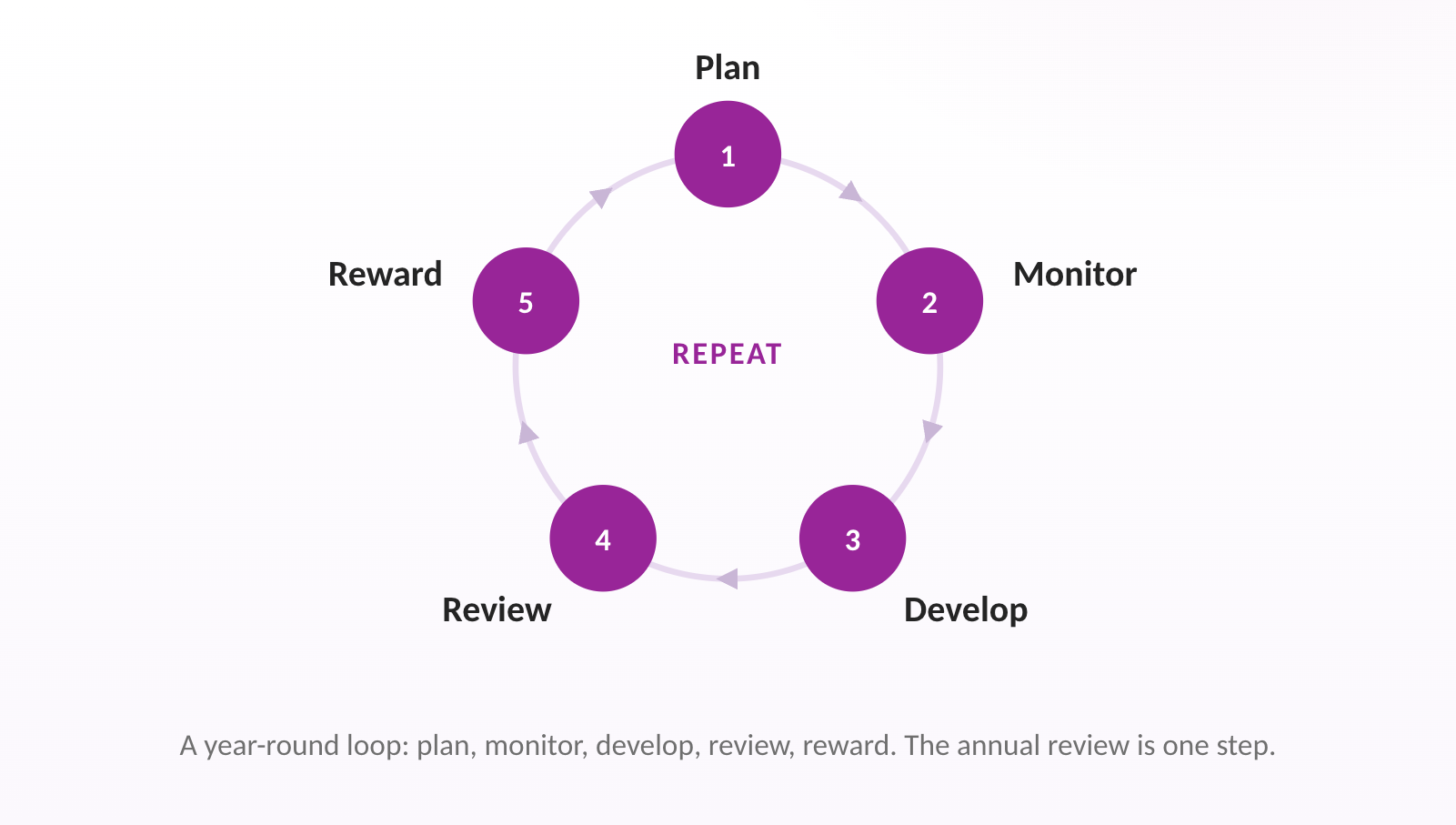
The cycle
- Plan: set goals (OKRs or SMART goals)
- Monitor: regular 1:1s and check-ins
- Develop: feedback, coaching, learning
- Review: formal performance review and calibration
- Reward: pay, promotion, recognition
Then it repeats.
Worked example
A 120-person company moves from one annual review to quarterly goals with monthly manager check-ins and a lighter year-end review. Managers now walk into the year-end conversation with four quarters of notes instead of a vague memory of the last six weeks.
Frequently asked questions
- Performance management vs performance appraisal?
- Appraisal is one event: the formal rating. Performance management is the whole year-round system around it.
- What is continuous performance management?
- An approach that replaces or supplements annual reviews with frequent check-ins and real-time feedback.
- What are the stages of the performance management cycle?
- Plan (set goals), monitor (feedback and check-ins), develop (coaching and growth), review (assess), and reward (recognition and pay).
- What is the difference between performance management and a performance review?
- Performance management is the ongoing system; the review is one periodic step within it that looks back and resets goals.
- What is the role of HR in performance management?
- HR owns the framework, cadence, and fairness (calibration and consistency), trains managers, and supplies the tooling. Managers run the day-to-day conversations.
- How do you measure performance management effectiveness?
- Look at goal completion, review quality and fairness (calibration), 1:1 frequency, and engagement and regrettable-attrition trends.
See it in practice
Compare performance management software
Related reading
Related terms