Performance Improvement Plan (PIP)
A performance improvement plan (PIP) is a formal, written plan that sets out where an employee is falling short, what good performance looks like, the support they will get, and the deadline to improve. PIPs usually run 30, 60, or 90 days. At the end, the employee either meets the goals, gets an extension, or faces further action.
Also known as: pip, pip at work, pip meaning, performance plan
Reviewed
Key takeaways
- A PIP is a structured, time-bound plan to close a clear gap between agreed expectations and actual performance.
- A fair PIP has specific gaps, measurable goals, real support, regular check-ins, and a defined end.
- It should follow earlier informal feedback, not be the first conversation.
- The goal is to fix performance, not to build a paper trail for exit.
At a glance
- Typical length
- 30, 60, or 90 days
- Must include
- Gaps, goals, support, check-ins, review
- Precede with
- Informal feedback first
- Related
- Managing underperformance, performance goals
Free template
PIP template
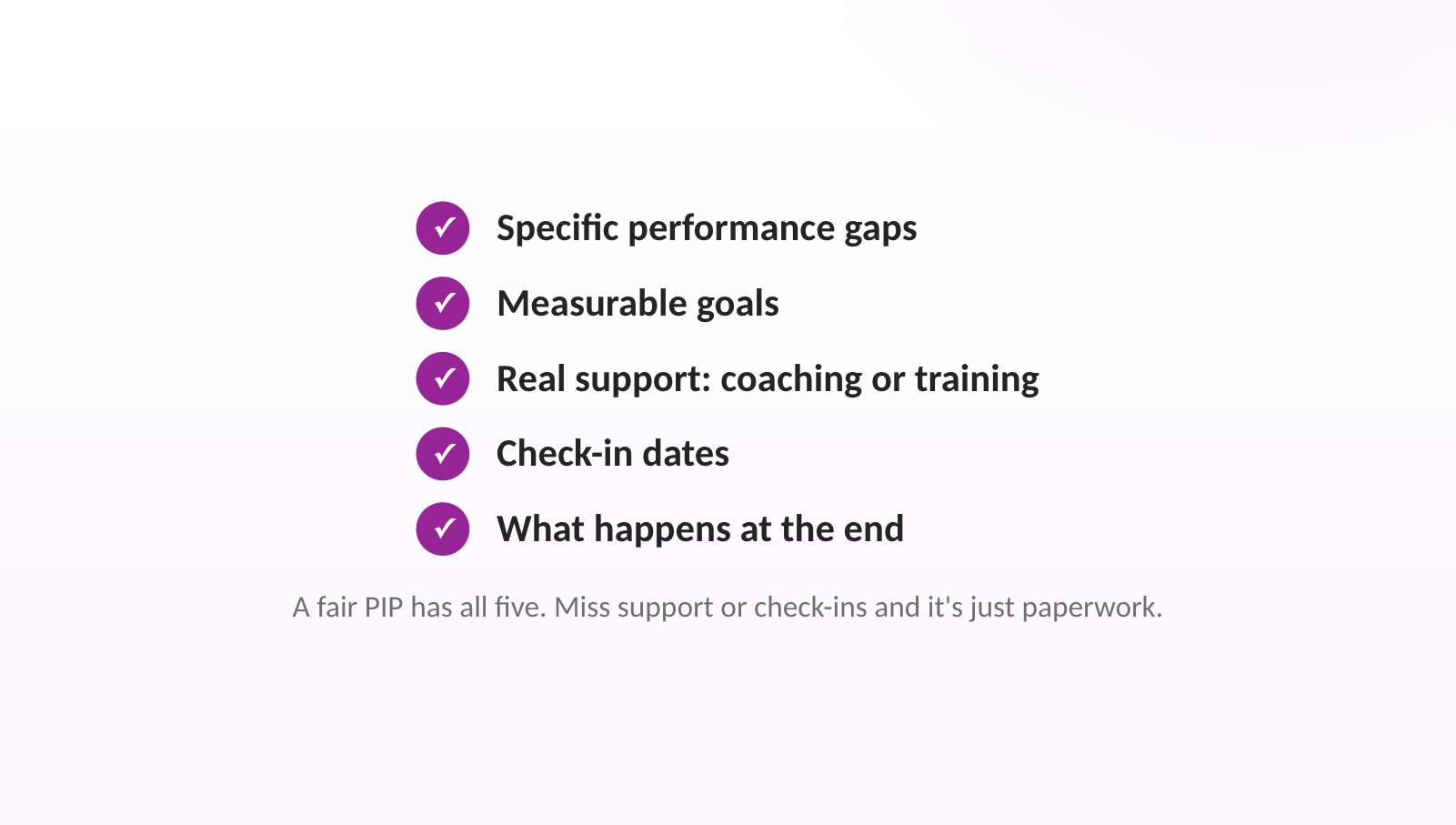
A fair PIP has all five parts. Skip the support or the check-ins and it is just a paper trail, not a genuine chance to improve.
Why does a PIP matter?
Done well, a PIP is a clear last chance with real support behind it. Done badly, it is paperwork before an exit, and employees know it. The difference is whether the goals are specific, the support is real, and the manager actually checks in.
What to include
- The specific performance gaps, with examples and dates
- Measurable goals that define success
- Support offered: training, coaching, resources, check-ins
- The timeline and review dates
- What happens at the end, in plain terms
Template
| Area | Current performance | Expected performance | Support | Check-in dates |
|---|---|---|---|---|
| e.g. Sales calls | 15 calls/week | 30 calls/week | Weekly call coaching | Weeks 2, 4, 6, 8 |
Worked example
An account manager has missed renewal targets for two quarters. The 60-day PIP sets a goal of 90% on-time renewals, pairs her with a senior AM for weekly call reviews, and books four check-ins. By day 45 she is at 88%, so the manager extends by 30 days rather than closing the plan.
Frequently asked questions
- Does a PIP mean I'm getting fired?
- Not always. But it is a serious signal. Ask for the goals in writing, ask what support you will get, and keep notes of every check-in.
- How long is a PIP?
- Usually 30, 60, or 90 days, depending on the role and how long improvement can reasonably take to show.
- What should be in a PIP?
- Specific performance gaps, measurable goals, the support provided (coaching or training), scheduled check-ins, and what happens at the end.
- Can you survive a PIP?
- Yes. A genuine PIP is a chance to improve, and many people do. Treat the goals and check-ins seriously and ask for the support you need.
- Who should be involved in a PIP?
- The employee and their manager, usually with HR, so the plan is fair, consistent, and documented.
- What makes a PIP unfair?
- Vague goals, no support, no check-ins, an impossible timeline, or using it purely to document an exit that is already decided.
See it in practice
Compare performance management software
Related reading
Related terms