Performance Review
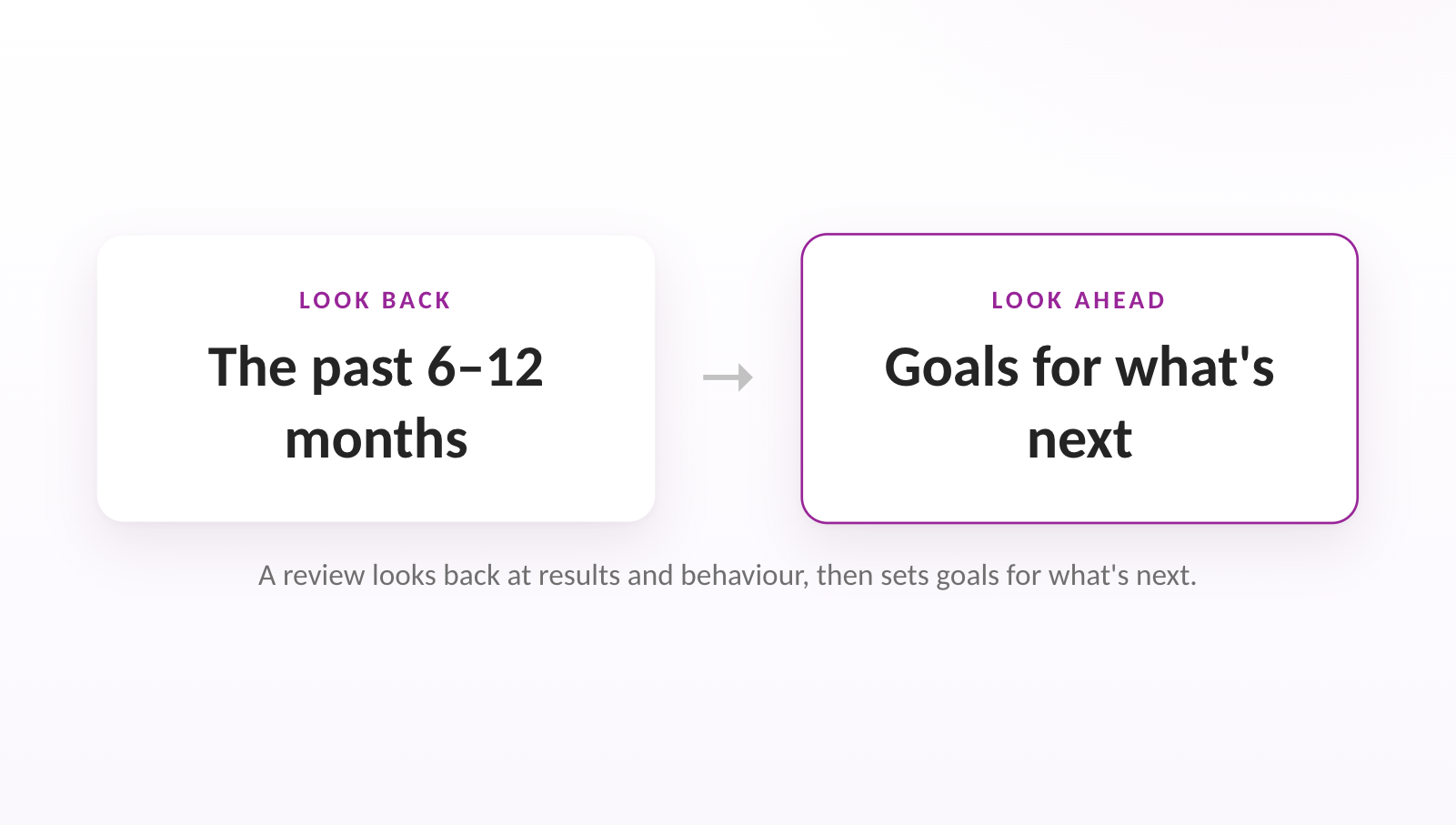
A performance review, also called a performance appraisal or evaluation, is a formal assessment of an employee's work over a set period, usually six or twelve months. The manager and employee look back at goals, results, and behaviours, agree on a rating or summary, and set goals for the next period. Reviews often feed pay and promotion decisions.
Also known as: performance appraisal, employee appraisal, annual review, staff appraisal
Reviewed
Key takeaways
- A performance review is a structured look back at results and behaviour, then a look forward to goals.
- It works best as a summary of ongoing feedback, not a once-a-year surprise.
- Specific, evidence-based comments matter more than the rating.
- Calibration keeps ratings fair and consistent across managers.
At a glance
- Cadence
- Annual, often with mid-year or quarterly check-ins
- Covers
- Results + behaviour, then goals
- Fairness tool
- Calibration across managers
- Related
- Review comments, 360 feedback, self-assessment
Why do performance reviews matter?
A review is the one moment in the year where expectations, results, and pay all sit in the same conversation. When it is well run, people leave knowing exactly where they stand. When it is badly run, it becomes a surprise, and surprises destroy trust.
How do you conduct performance reviews?
- Prepare: pull goals, results, past 1:1 notes, and peer input.
- Ask for a self-assessment before the meeting.
- Open with their view, then share yours.
- Use specific examples, not adjectives.
- Separate the look-back from the look-ahead. Close with two or three goals for next period.
- Write it up and share within 48 hours.
Worked example
Instead of "you need to communicate better", a manager says: "In the March launch, the design team learned about the date change two days late, and we lost a week of rework. Next quarter, let's set a rule that timeline changes go to all leads the same day."
Frequently asked questions
- How often should performance reviews happen?
- Most companies run them annually or twice a year. Many now add quarterly check-ins so the formal review holds no surprises.
- What is the difference between a performance review and a 1:1?
- A 1:1 is a regular, informal check-in. A review is a formal, documented assessment of a whole period.
- What should a performance review include?
- A look back at results and behaviour against agreed goals, specific examples, a rating where used, and clear goals for the next period.
- How do you prepare for a performance review?
- Gather evidence of results, note strengths and one honest growth area, and come ready to ask what you would need to show to reach the next level.
- Are annual performance reviews still effective?
- On their own, rarely. They work far better paired with continuous feedback and 1:1s, so nothing in the review is a surprise.
- What is calibration in performance reviews?
- A meeting where managers compare ratings across teams to apply a consistent standard and remove individual bias.
See it in practice
Compare performance review software
Related reading
Related terms