360-Degree Feedback
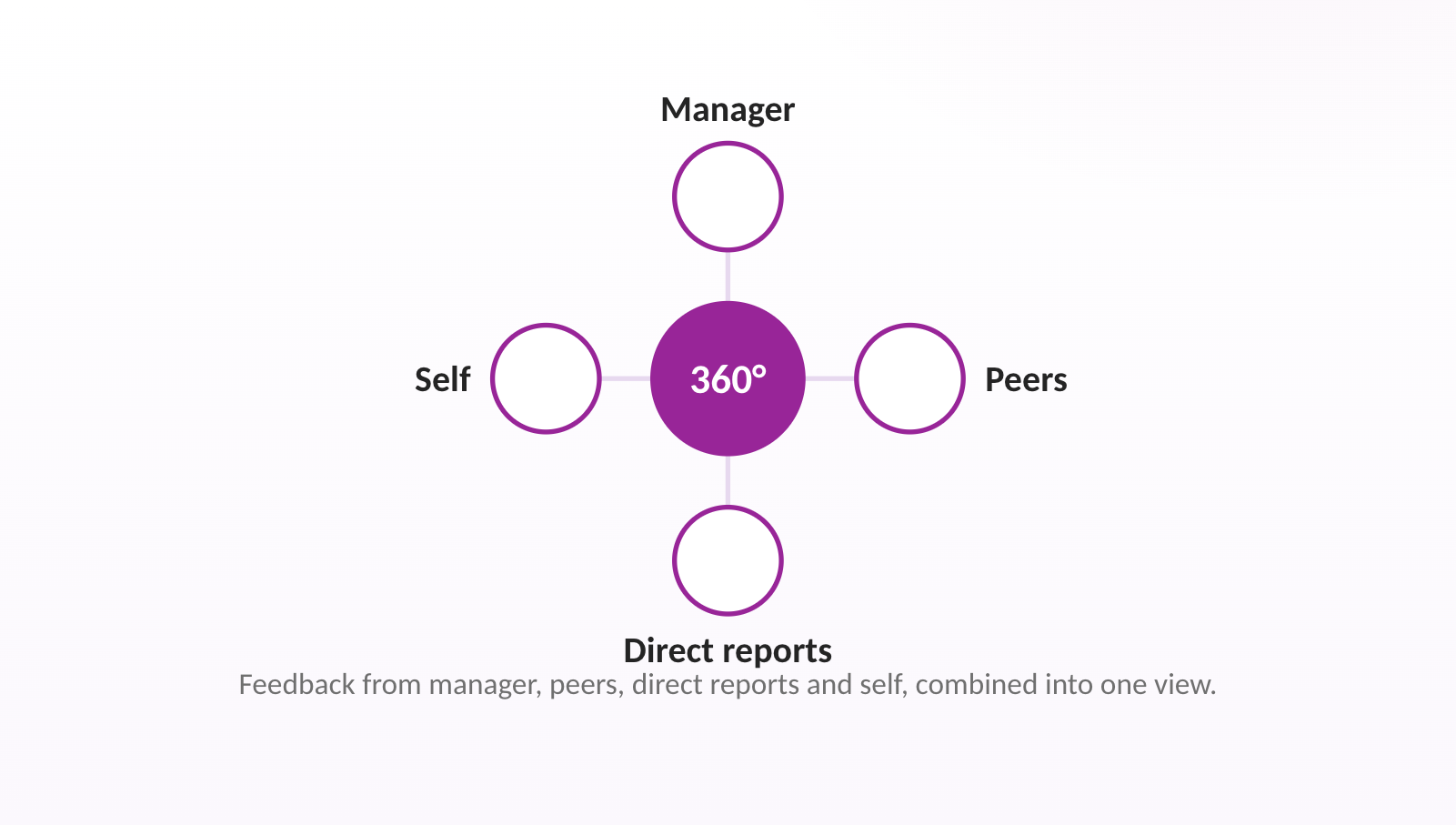
360-degree feedback, or a 360 review, is a process where an employee gets feedback from people all around them at work: their manager, peers, direct reports, and sometimes clients, plus their own self-assessment. Responses are usually anonymous and combined into one report. It is mainly used for development, especially for managers and leaders.
Also known as: 360 feedback, 360 review, 360 assessment, multi-rater feedback
Reviewed
Key takeaways
- 360 feedback gathers input from manager, peers, direct reports, and self.
- It reveals blind spots a single manager's view misses.
- It works best for development, and gets risky when tied directly to pay.
- Anonymity and enough raters are what make the feedback honest and fair.
At a glance
- Raters
- Manager, peers, direct reports, self
- Best for
- Development, not pay decisions
- Raters needed
- Enough to protect anonymity (often 5+ peers)
- Related
- Performance review, employee feedback
Why does 360-degree feedback matter?
A manager sees only part of how someone works. Peers see collaboration. Direct reports see leadership. Comparing all of that with the person's own view reveals blind spots that a single-rater review misses.
How does 360-degree feedback work?
- Choose 5 to 10 raters across groups.
- Use a short survey: ratings plus 2 or 3 open questions.
- Keep responses anonymous and aggregate by group.
- Share the report in a coached conversation, not by email.
- Pick one or two development goals from it.
Sample questions
- What should this person keep doing?
- What should they start doing?
- What should they stop doing?
- How well do they share information with you? (1 to 5)
- How well do they handle disagreement? (1 to 5)
Worked example
A new engineering manager rates herself 4.5 out of 5 on "gives clear direction". Her direct reports average 2.8. Peers average 4.2. The gap is with her own team, so her development goal becomes writing a clear goal and priority note at the start of every sprint.
Frequently asked questions
- Should 360 feedback be tied to pay?
- Most experts advise against it. Tying it to pay makes raters less honest and turns a development tool into a political one.
- How many raters does a 360 need?
- Enough to protect anonymity, usually at least three per group.
- What is 360-degree feedback?
- A review method that collects feedback on someone from multiple directions: manager, peers, direct reports, and themselves, combined into one view.
- What questions are on a 360 survey?
- Behaviour-based items rated on a scale (for example “gives clear, useful feedback”) plus a few open questions, ideally mapped to a competency framework.
- Should 360 feedback be anonymous?
- Peer and direct-report feedback is usually anonymised and aggregated above a minimum group size, which encourages candour. The manager's input is typically identified.
- Is 360 feedback good or bad?
- Used for development it is valuable; tied directly to pay or promotion it can trigger gaming and score inflation. Separate the two.
See it in practice
Compare performance review software
Related reading
Related terms