Self-Assessment
A self-assessment, or self-evaluation, is an employee's written review of their own performance over a set period, usually completed before a formal performance review. It covers results against goals, strengths, areas to improve, and goals for the next period. The manager reads it before the meeting so the conversation starts from both views.
Also known as: self appraisal, self review, self evaluation
Reviewed
Key takeaways
- A self-assessment is your own account of your results, strengths, growth areas, and needs.
- Lead with results and impact, backed by specifics and numbers.
- Name one honest growth area and what you are doing about it, not a fake weakness.
- It sets the agenda for the review, so it is worth doing well.
Why does a self-assessment matter?
It gives employees a voice in their own review and surfaces work the manager may not have seen. It also exposes gaps in expectations early: if an employee rates themselves far above or below the manager, that is the real conversation to have.
How do you write a self-assessment?
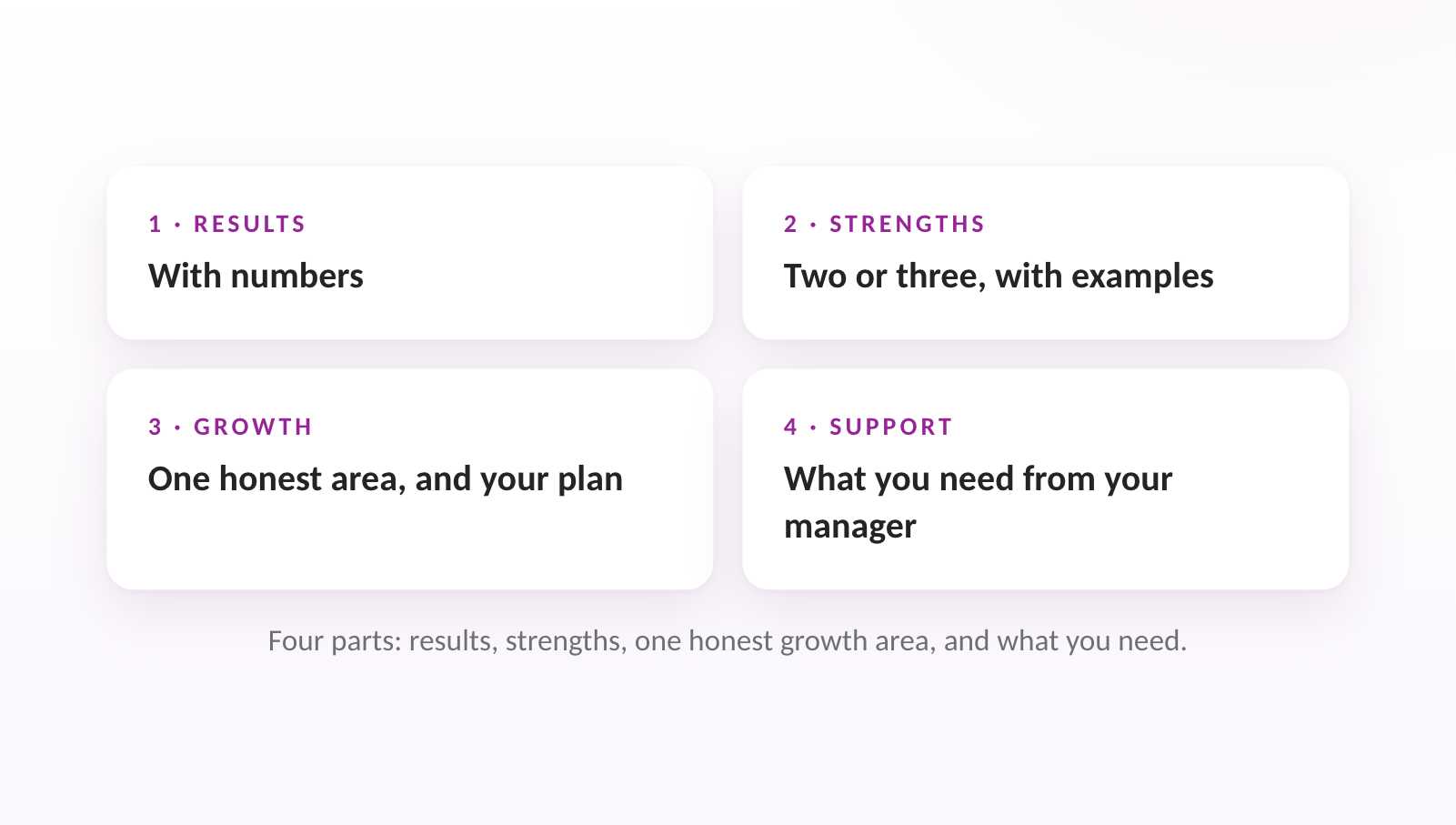
- List results against each goal, with numbers.
- Name two or three strengths, each with an example.
- Name one or two growth areas honestly, with what you are doing about them.
- Note what you need from your manager or the company.
- Propose goals for the next period.
Example answers
- Accomplishment: "I led the pricing page redesign, which lifted demo requests by 22% in the quarter after launch."
- Strength: "I keep stakeholders aligned. I sent a weekly two-line update on the migration, and no team was surprised by the cutover."
- Growth area: "I take on too much myself. In Q2 I missed two deadlines because I didn't delegate. I've started assigning owners at kickoff."
- Need: "I'd like a stretch project with more cross-team leadership before the next cycle."
Frequently asked questions
- Should I rate myself high or low?
- Rate yourself honestly, with evidence. Over-rating without proof loses credibility. Under-rating can anchor your manager low.
- How long should a self-assessment be?
- One to two pages. Specific beats long.
- What should you include in a self-assessment?
- Your main results with evidence, two or three strengths with examples, one honest growth area and your plan, and what you need from your manager.
- How do you write a good self-assessment?
- Be specific and factual, quantify impact where you can, own one real development area, and connect your work to team or company goals.
- Should you be honest in a self-assessment?
- Yes. Credible self-assessment, including one genuine growth area, builds trust and makes the review more useful than inflated or falsely modest ratings.
- What is an example of a self-assessment comment?
- “Led the billing migration two weeks early with zero errors. I want to grow in stakeholder communication and have started leading the weekly update.”
See it in practice
Compare performance review software
Related reading
Related terms