Positive Feedback
Positive feedback is specific recognition of something a person did well, given so they understand exactly what to repeat. It is different from praise. "Great job" is praise. "Your one-page summary let the exec team decide in ten minutes" is positive feedback, because it names the behaviour and its impact.
Also known as: examples of positive feedback, reinforcing feedback, feedback examples
Reviewed
Key takeaways
- Positive feedback reinforces what is working so people do more of it.
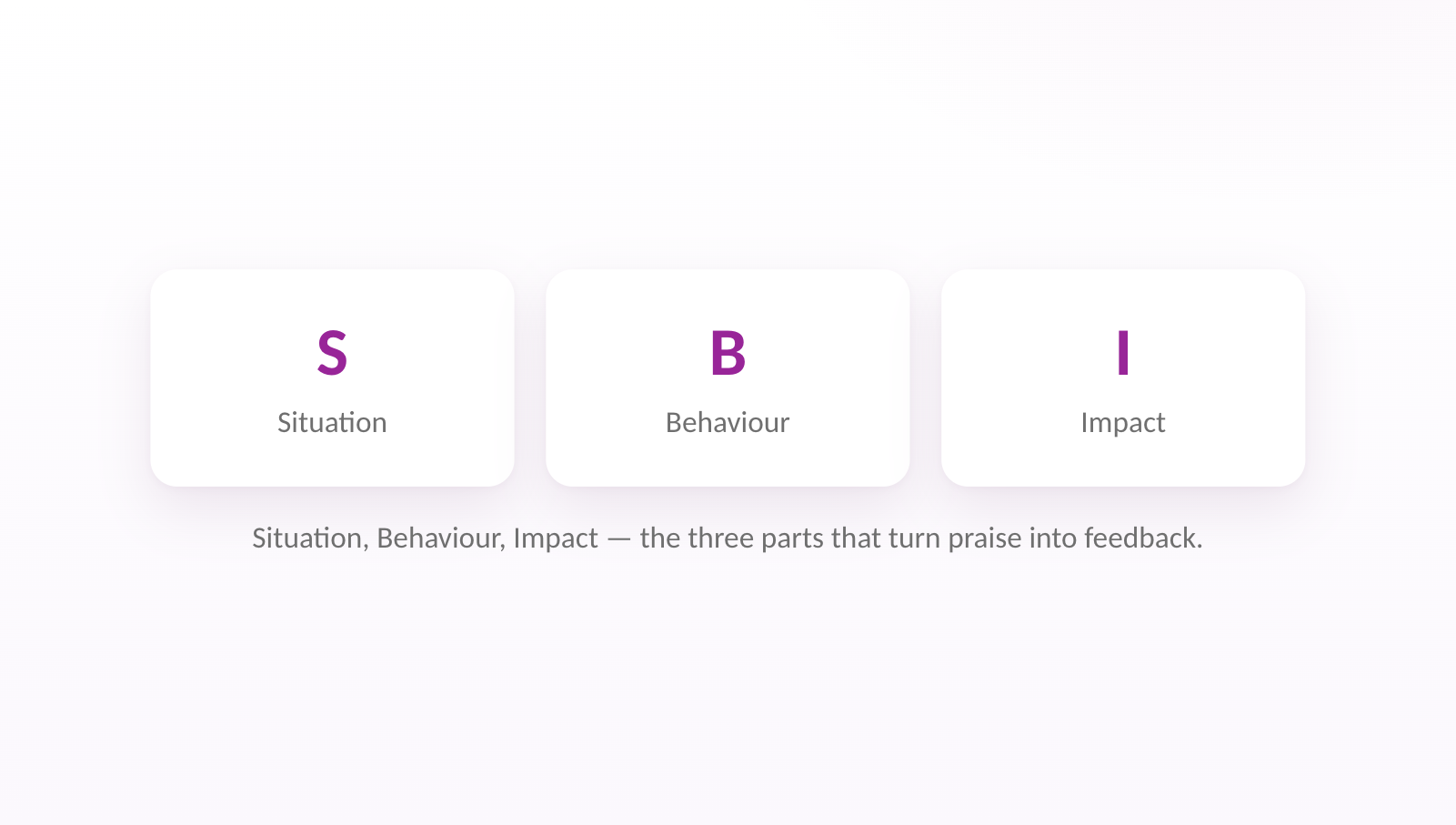
- Make it specific: name the situation, the behaviour, and the impact (SBI).
- “Good job” is forgettable; “your summary let execs decide in ten minutes” sticks.
- Give it often and close to the moment, not saved for review season.
Why does positive feedback matter?
Most managers give feedback only when something goes wrong, so people learn what to avoid but not what to repeat. Specific positive feedback reinforces the behaviours you actually want and makes critical feedback easier to hear later.
A simple formula: SBI
The Situation-Behaviour-Impact model, from the Center for Creative Leadership:
- Situation: when and where
- Behaviour: what they did, observably
- Impact: what happened because of it
10 examples
- "In Tuesday's client call, you paused to summarise their concerns before answering. They visibly relaxed, and we got the renewal."
- "Your onboarding doc meant the new hire shipped in week one instead of week three."
- "You flagged the data issue before the board deck went out. That saved us a correction email to investors."
- "You stayed calm when the demo crashed and walked them through screenshots. They still signed."
- "Your code review comments explain the why, not just the fix. Juniors are learning faster because of it."
- "You said no to the extra project and explained the trade-off. That kept the launch on time."
- "You asked the quiet people in the retro for their view. We got two ideas we'd have missed."
- "Your weekly update is the first thing I read. It's short and the risks are at the top."
- "You mentored Priya through her first sprint. She told me it's why she felt confident."
- "You followed up with the customer a week later without being asked. That's why they referred us."
Frequently asked questions
- How often should you give positive feedback?
- Often, and close to the moment. A week later, the detail is lost.
- Can positive feedback be too frequent?
- Only when it is generic. Specific feedback rarely feels like too much.
- What is the SBI feedback model?
- Situation, Behaviour, Impact: describe when and where it happened, what the person did, and the effect it had. It turns vague praise into useful feedback.
- What is an example of positive feedback?
- “In today's client call, you summarised their concern before answering, and they visibly relaxed and signed off faster.”
- Is positive feedback the same as praise?
- Praise is general (“great work”); positive feedback is specific about the behaviour and its impact, so the person knows exactly what to repeat.
- Why is positive feedback important?
- People repeat what gets noticed. Specific reinforcement builds confidence, shapes behaviour, and costs nothing but attention.
Sources
- Situation-Behaviour-Impact (SBI) model, Center for Creative Leadership
See it in practice
Compare performance review software
Related reading
Related terms