SMART Goals
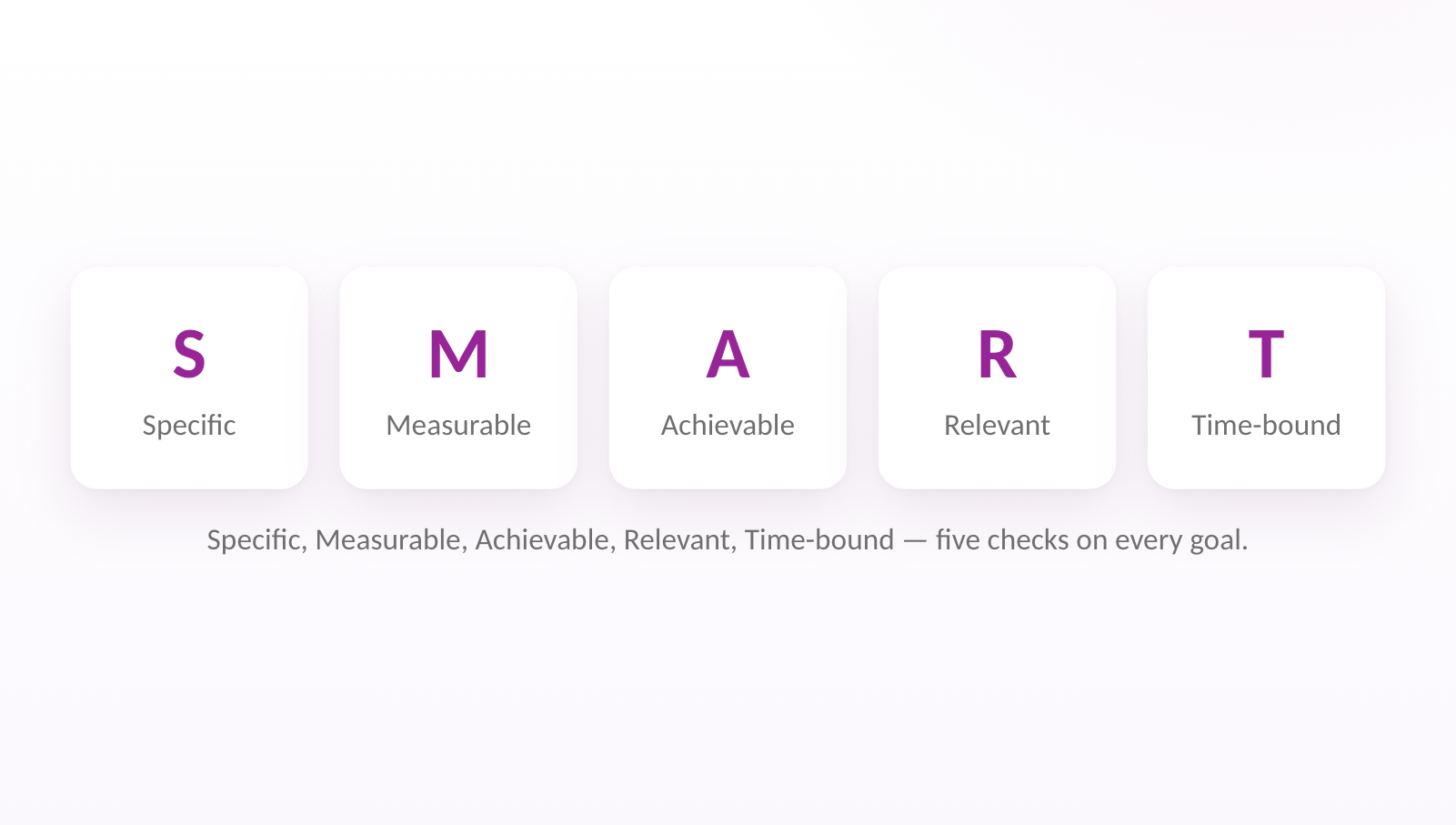
SMART goals are goals written to be specific, measurable, achievable, relevant, and time-bound. The acronym is a checklist that turns a vague intention like "get better at sales" into a goal anyone can verify, such as "close 12 new mid-market deals by 31 March". It was first described by George T. Doran in 1981.
Also known as: how to write smart goals, example of a smart goal, smart objectives, smart goals format
Reviewed
Key takeaways
- A SMART goal is Specific, Measurable, Achievable, Relevant, and Time-bound.
- The test: could someone else tell, without debate, whether you hit it?
- Keep three to five per cycle, and pair every volume goal with a quality goal.
- SMART makes a goal assessable, not ambitious, so set the bar separately.
At a glance
- Framework
- Specific · Measurable · Achievable · Relevant · Time-bound
- Best for
- Turning vague intentions into assessable targets
- How many
- 3 to 5 per review cycle
- Related
- Performance goals, OKRs, professional goals
Free template
SMART goal builder
Improve new-hire onboarding: Raise the onboarding survey score from 6.8 to 8.5 (by the end of Q3)
A strong goal passes all five checks. Keep three to five goals per cycle, and pair any volume goal with a quality goal.
Why do SMART goals matter?
Vague goals are impossible to review fairly. When a goal is SMART, the manager and the employee agree in advance on what "done" looks like. That makes check-ins faster and performance reviews far less subjective.
The format
- Specific: what exactly, and who owns it
- Measurable: the number or evidence that proves it
- Achievable: a stretch, but realistic with the resources available
- Relevant: connected to a team or company priority
- Time-bound: a clear deadline
Fill-in template: "I will [specific action] to reach [measurable target] by [date], which supports [team or company priority]."
Worked example
Before: "Improve customer support."
After: "Reduce average first response time on support tickets from 9 hours to 4 hours by 30 June, to support our Q2 retention goal."
Frequently asked questions
- What is the difference between SMART goals and OKRs?
- SMART is a way to write a single goal well. OKRs are a full system for setting and tracking goals across a company. A good key result is usually SMART.
- Are SMART goals still useful?
- Yes, for clarity. The common criticism is that "achievable" can push people toward safe goals, so pair them with a few stretch goals.
- What is an example of a SMART goal?
- “Raise the onboarding survey score from 6.8 to 8.5 by the end of Q3 with a revamped first-week plan.” It names the metric, the target, the deadline, and the how.
- What does the A in SMART stand for?
- Most commonly Achievable (realistic given resources and constraints). Some versions use Attainable or Assignable, but the intent is the same: the goal should be within reach.
- Who created the SMART framework?
- The acronym was popularised by George T. Doran in a 1981 Management Review article. Variations have appeared since, but the five-part check has stayed broadly the same.
- How many SMART goals should you set?
- Three to five per review cycle is a good rule. Fewer than three can miss important work; more than five usually means none of them get real focus.
See it in practice
Compare OKR and goal-setting software
Related reading
Related terms