Presenteeism
Presenteeism is when employees are at work, in person or online, but not functioning at full capacity because they are unwell, exhausted, stressed, or distracted. It includes working while sick and the habit of staying visibly "on" to look committed. It is harder to see than absenteeism, but often costs more in lost output.
Also known as: working while sick, sickness presenteeism, productivity loss
Reviewed
Key takeaways
- Presenteeism is being at work but not functioning fully, because of illness, exhaustion, or stress.
- It is harder to spot than absence and often costs more in lost output and mistakes.
- A sick day costs a day; working sick can cost a week of errors and spread illness.
- Near-zero sick days can be a warning sign, not a good one.
At a glance
- What it is
- At work, but not able to work properly
- Why it's costly
- Invisible, and often more than absence
- Signs
- More errors, slower output, working while unwell
- Related
- Absenteeism, wellbeing, burnout
Why does presenteeism matter?
A sick employee who stays home loses a day. A sick employee who works through it can lose a week of quality, make costly mistakes, and pass the illness on. Presenteeism also hides burnout, because the person still looks present.
What causes presenteeism?
- A culture that rewards being seen working
- Fear of falling behind or being judged
- Limited sick leave or unclear policies
- Heavy workload with no cover
- Remote "always online" expectations
What are the signs of presenteeism?
More errors than usual, slower response times, long hours with less output, and people logging in while on sick leave.
Worked example
A support team has near-zero sick days, which leadership reads as a good sign. But error rates double every winter. A pulse survey shows 60% of the team worked while sick in the last quarter because there is no cover. Adding a cover rota and a clear "stay home when sick" norm brings winter error rates back to baseline.
Frequently asked questions
- Presenteeism vs absenteeism?
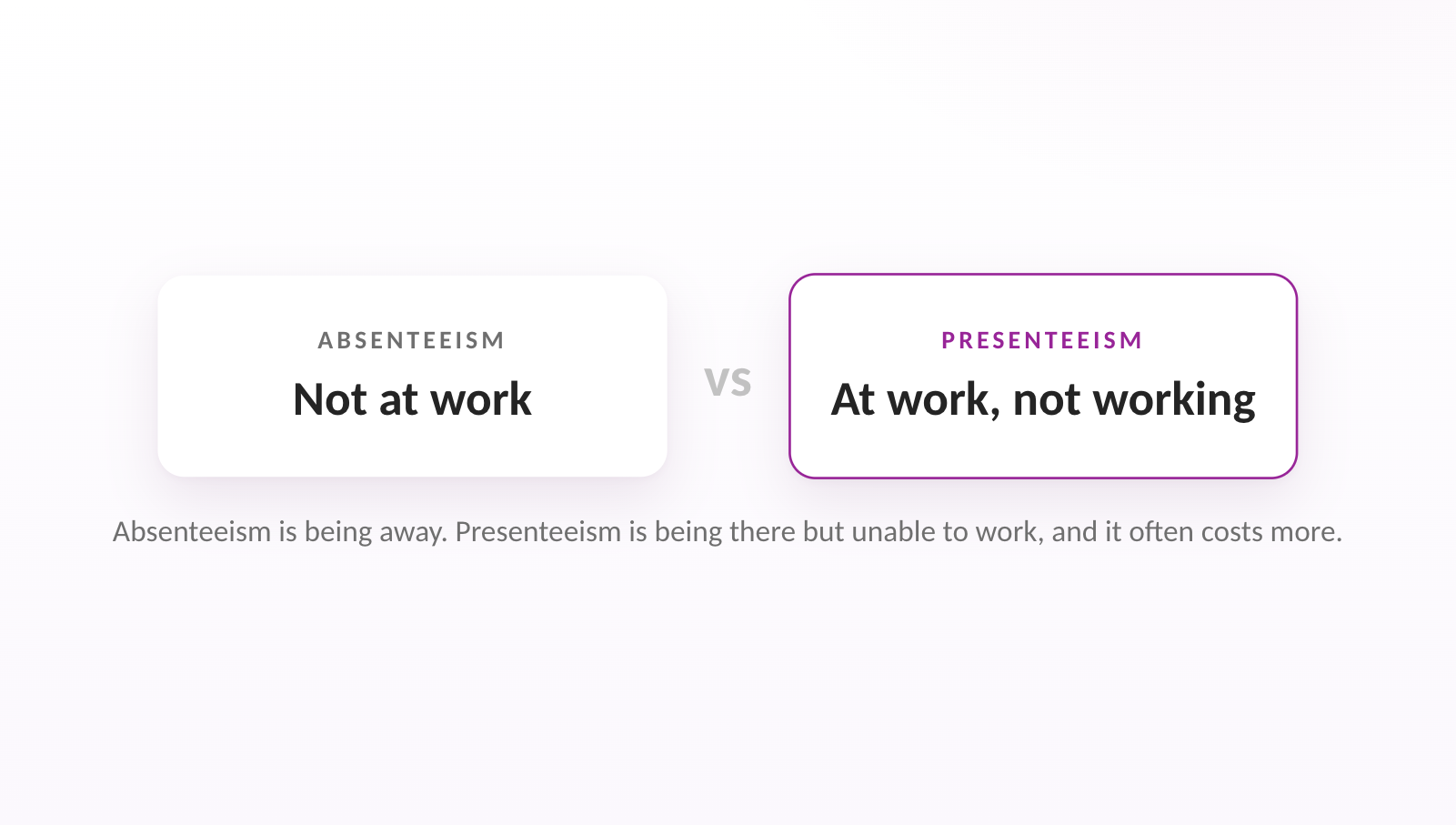
- Absenteeism is not being at work. Presenteeism is being at work but not able to work effectively.
- How do you measure presenteeism?
- There is no single formula. Use self-reported survey questions about working while unwell, alongside output and quality data.
- What causes presenteeism?
- A culture that rewards being seen working, fear of falling behind, limited or unclear sick leave, heavy workload with no cover, and always-online remote expectations.
- What is the difference between presenteeism and absenteeism?
- Absenteeism is not being at work; presenteeism is being at work but not able to work effectively. Presenteeism is harder to see and often more expensive.
- Is presenteeism worse than absenteeism?
- Often, yes. Research suggests the hidden productivity loss from people working while unwell can exceed the cost of the sick days they would otherwise take, and it can spread illness through the team.
- How do you reduce presenteeism?
- Make it genuinely easy to stay home when sick, provide cover, set clear sick-leave norms, and stop rewarding visible overwork.
See it in practice
Compare employee engagement software
Related terms