Gross Pay
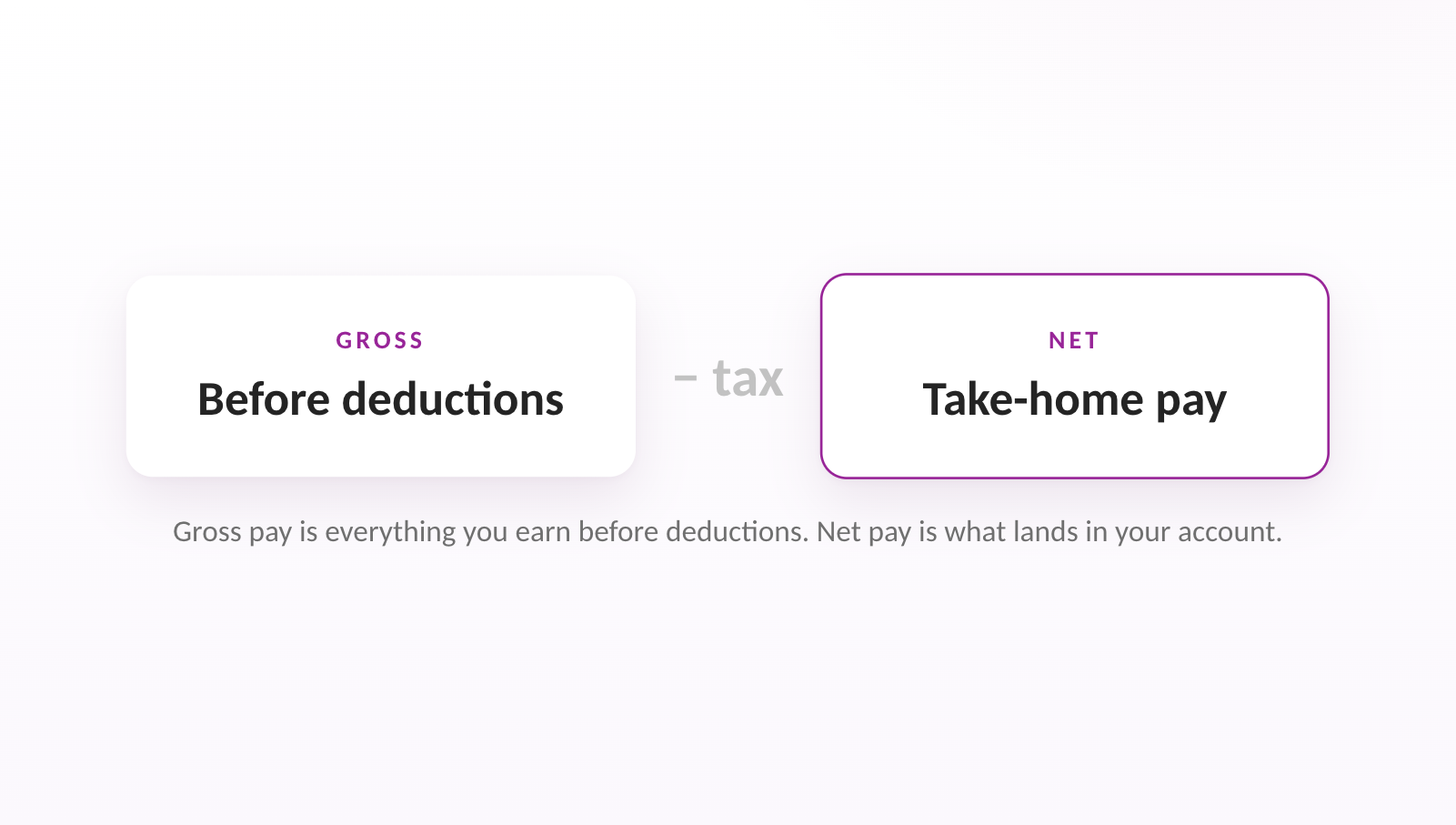
Gross pay is the total amount an employee earns in a pay period before any taxes or deductions are taken out. It includes base wages or salary, overtime, bonuses, commissions, and taxable allowances. Net pay, or take-home pay, is what is left after deductions like income tax, social security, retirement contributions, and benefits premiums.
Also known as: gross salary, gross income, gross pay formula, how to calculate gross pay
Reviewed
Key takeaways
- Gross pay is total earnings before taxes and deductions.
- It includes base wages or salary plus overtime, bonuses, commission, and taxable allowances.
- Net pay (take-home) is what is left after deductions.
- Confusing gross with net is the most common payslip surprise.
At a glance
- What it is
- Total earnings before deductions
- Hourly
- (Hours × rate) + overtime
- Salaried
- Annual salary ÷ pay periods
- vs Net
- Net = gross − taxes & deductions
Free calculator
Gross pay calculator
Gross pay is total earnings before taxes and deductions. Hourly mode applies 1.5× overtime on hours over 40 in a week; overtime rules vary by country and state.
Why does gross pay matter?
Gross pay is the number in the offer letter and the number most benefits and tax calculations start from. Confusing it with net pay is one of the most common reasons new employees are surprised by their first payslip.
How do you calculate gross pay?
Hourly: gross pay = (regular hours × hourly rate) + (overtime hours × overtime rate)
Salaried: gross pay = annual salary ÷ number of pay periods
Add any bonus, commission, or taxable allowance paid in that period.
In the US, non-exempt employees generally earn 1.5× their regular rate for hours over 40 in a workweek. Rules vary by country and state.
Worked example
Hourly: $25/hour, 45 hours in the week. Regular: 40 × $25 = $1,000. Overtime: 5 × $37.50 = $187.50. Gross pay = $1,187.50.
Salaried: $78,000 a year, paid semi-monthly (24 periods). Gross pay per period = $3,250.
Frequently asked questions
- Gross pay vs net pay?
- Gross is before deductions. Net is what lands in your bank account.
- Is gross pay the same as salary?
- For a salaried employee with no extras, gross pay per period is salary divided by pay periods. Overtime, bonus, or commission make it higher.
- How do you calculate gross pay?
- Hourly: hours × rate plus overtime. Salaried: annual salary ÷ number of pay periods. Then add any bonus or commission paid that period.
- What is included in gross pay?
- Base wages or salary, overtime, bonuses, commission, and taxable allowances, before any deductions.
- What is the difference between gross pay and net pay?
- Gross is before deductions; net is what lands in your account after income tax, social security, retirement contributions, and benefits.
- Is overtime part of gross pay?
- Yes. Overtime is added to gross pay. In the US, non-exempt staff generally earn 1.5× their rate over 40 hours a week.
See it in practice
Compare talent management software
Related terms