Extrinsic Motivation
Extrinsic motivation is the drive to do something because of an outcome outside the activity itself: a reward to earn or a consequence to avoid. At work, that includes salary, bonuses, commissions, promotions, public recognition, and deadlines. It is the opposite of intrinsic motivation, where the work itself is the reward.
Also known as: external motivation, intrinsic vs extrinsic motivation, extrinsically motivated
Reviewed
Key takeaways
- Extrinsic motivation is doing something for an external outcome: pay, a bonus, recognition, or avoiding a penalty.
- It works well for routine, clearly-defined tasks and short-term pushes.
- Over-used, it can crowd out intrinsic drive (the overjustification effect).
- The best systems combine fair extrinsic rewards with genuine intrinsic drivers.
Why does extrinsic motivation matter?
Extrinsic motivators are the easiest levers a company controls. They work well for clear, routine tasks and for getting attention on a priority fast. They work less well for creative or complex work, and over-relying on them can crowd out the intrinsic drive people already had.
Intrinsic vs extrinsic
| Intrinsic | Extrinsic | |
|---|---|---|
| Source | The work itself | Rewards or consequences |
| Examples | Curiosity, mastery, purpose | Pay, bonus, title, deadlines |
| Best for | Complex, creative work | Clear, routine, short-term goals |
| Risk | Hard to create directly | Can crowd out intrinsic drive |
Worked example
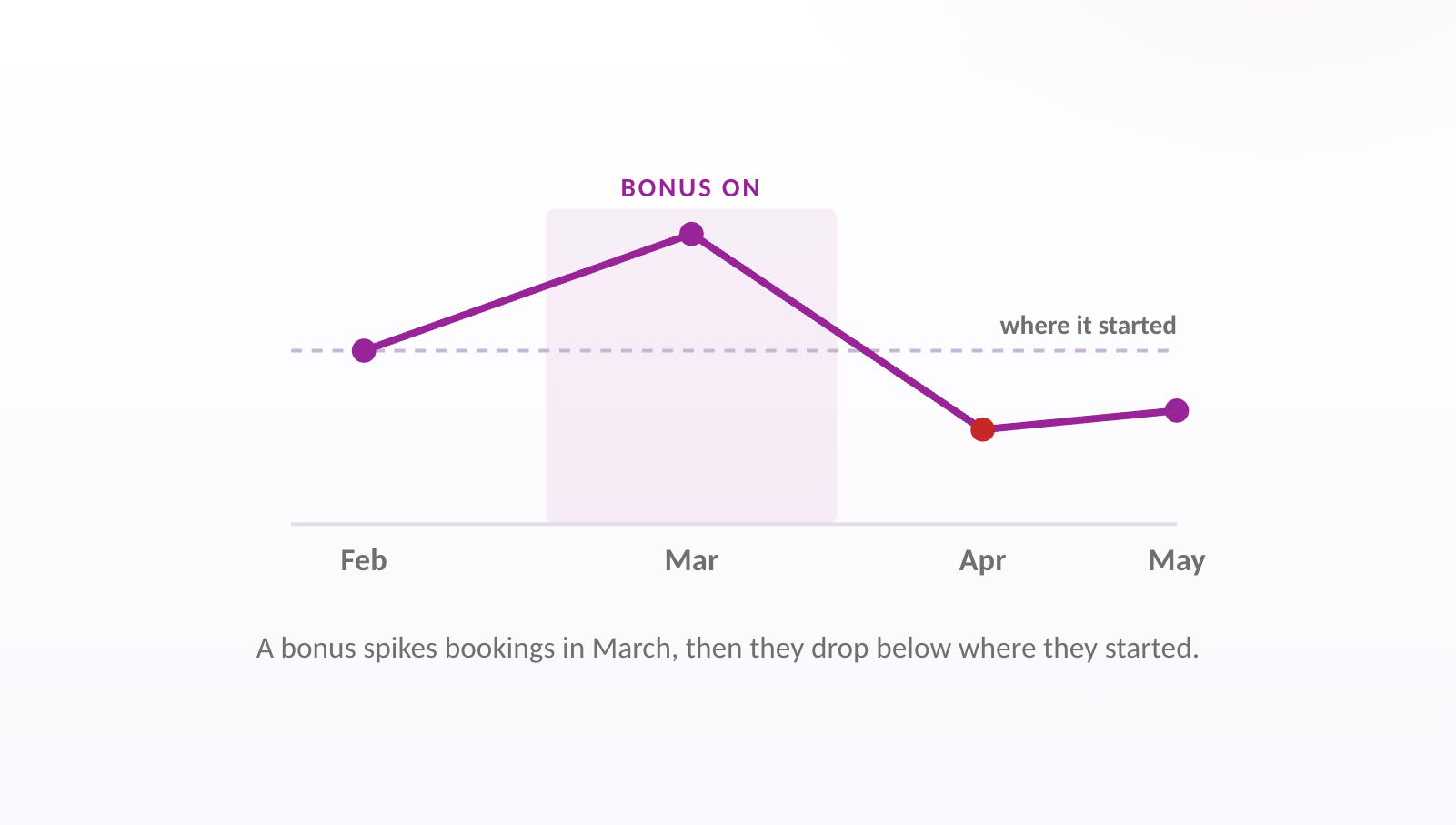
A sales team gets a spiff for every demo booked in March. Demo bookings jump 40%. In April, after the spiff ends, bookings drop below February levels, and many March demos turn out to be poor-fit leads. The reward drove volume, but not the judgement the team needed.
Frequently asked questions
- What is the overjustification effect?
- When an external reward is added to something people already enjoy, they can start to see the task as "for the reward" and lose interest once it is removed.
- Is extrinsic motivation bad?
- No. Fair pay and recognition matter. Problems appear when rewards are the only reason to do the work.
- What are examples of extrinsic motivation?
- Commission, bonuses, spot awards, public recognition, promotions, or working to avoid a poor review.
- When does extrinsic motivation work best?
- For routine, well-defined, or short-term tasks where the goal is clear and effort maps directly to the reward.
- What is the difference between intrinsic and extrinsic motivation?
- Intrinsic comes from the satisfaction of the work itself; extrinsic comes from an external reward or consequence. Most roles need both.
- Can extrinsic rewards backfire?
- Yes. Heavy reliance on rewards for already-interesting work can reduce intrinsic motivation and encourage gaming the metric.
Sources
- Deci & Ryan, Self-Determination Theory
- Lepper, Greene & Nisbett (1973), the overjustification effect
See it in practice
Compare employee engagement software
Related terms