Retention Bonus
A retention bonus is a one-time payment offered to an employee for staying with the company until a set date or milestone. Companies use them during mergers and acquisitions, restructures, major projects, or when a critical person is at risk of leaving. The money is usually paid only if the employee is still employed on the agreed date.
Also known as: stay bonus, retention package, retention incentive
Reviewed
Key takeaways
- A retention bonus is a one-time payment to stay through a defined period or event.
- It is common around acquisitions, big projects, or key-person risk.
- Read the clawback clause: leave early and you may repay it.
- It buys time, not loyalty; pair it with the reasons people actually stay.
At a glance
- What it is
- One-time payment to stay
- Typical period
- 6 to 24 months
- Watch for
- Clawback clauses
- Related
- Gross pay, OTE, retention
Why does a retention bonus matter?
It buys time. A retention bonus can keep key knowledge in the building through a risky period. It does not fix the reasons people want to leave, so on its own it often just delays the exit.
How is a retention bonus structured?
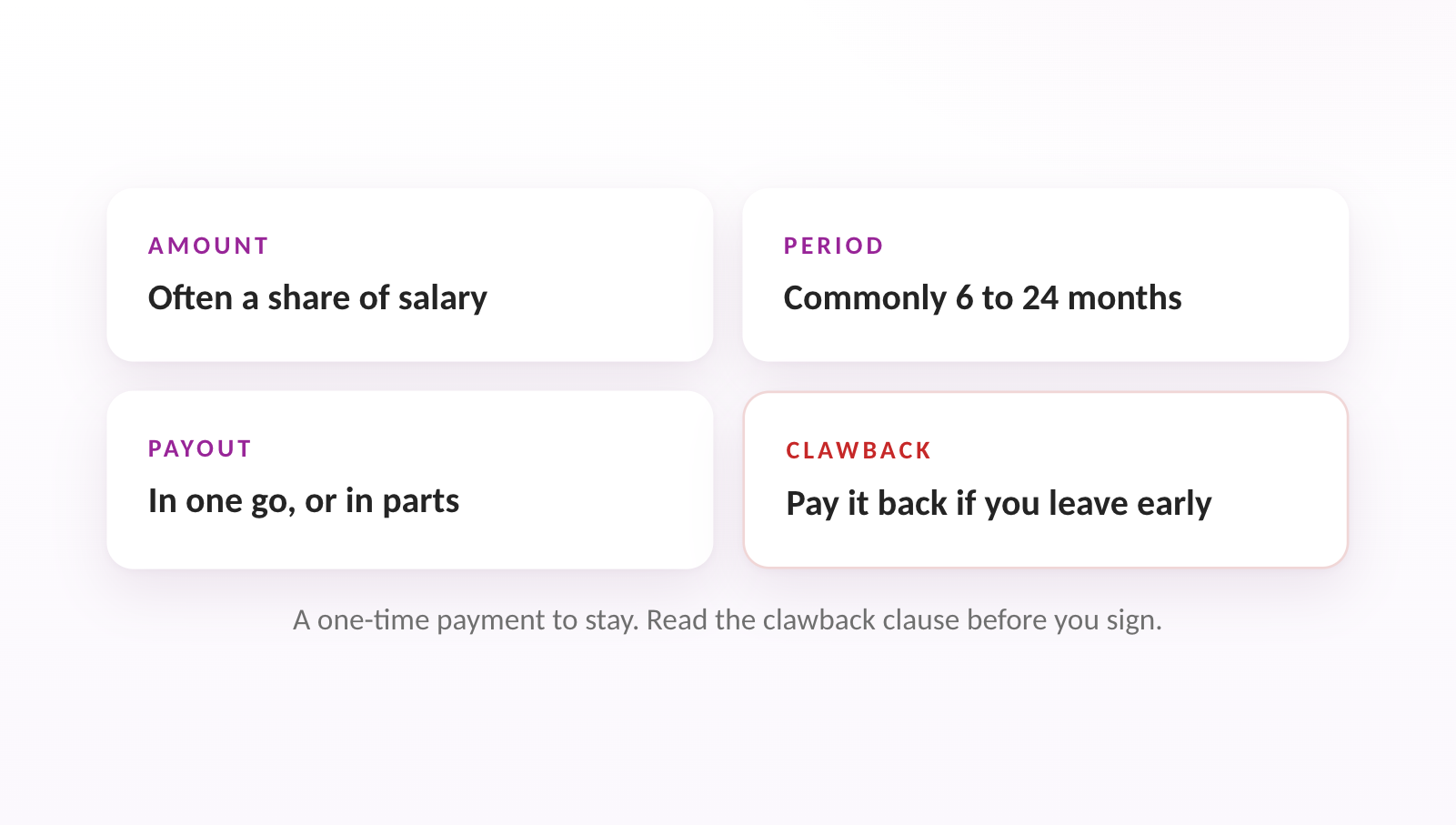
- Amount: often a percentage of base salary or a fixed sum
- Retention period: commonly 6 to 24 months, or tied to an event like a deal close
- Payout: a lump sum at the end, or split into instalments
- Clawback: a clause requiring repayment if the person leaves early, where paid upfront
- Taxes: usually taxed as regular income
Worked example
During an acquisition, a company offers its lead platform engineer a retention bonus of 25% of salary, paid in two halves: one at the deal close and one six months after. She stays through integration, and the team avoids a gap in the one role that knew the legacy system.
Frequently asked questions
- Retention bonus vs signing bonus?
- A signing bonus is paid to join. A retention bonus is paid to stay.
- Does a retention bonus work?
- It works for a defined period and a clear reason. Used as a fix for low engagement, it usually only delays the exit.
- How much is a typical retention bonus?
- Often a share of annual salary (commonly 10–25%), though it varies widely with role criticality and the situation.
- What is a clawback clause?
- A term requiring you to repay some or all of the bonus if you leave before the agreed date. Always read it before signing.
- When do companies offer retention bonuses?
- Usually during mergers and acquisitions, major projects, leadership transitions, or when losing a specific person would be costly.
- Are retention bonuses taxable?
- Yes, they are treated as taxable income like other bonuses. Check how it is withheld in your region.
See it in practice
Compare employee engagement software
Related terms