Intrinsic Motivation
Intrinsic motivation is the drive to do something because the activity itself is satisfying, interesting, or meaningful, not because of a reward or pressure from outside. At work, it looks like an engineer refactoring code because she enjoys making it clean, or a manager mentoring because he likes seeing people grow.
Also known as: internal motivation, self-determination, examples of intrinsic motivation
Reviewed
Key takeaways
- Intrinsic motivation is doing something because it is inherently satisfying, not for a reward.
- Self-Determination Theory ties it to three needs: autonomy, competence, and relatedness.
- It drives sustained effort, creativity, and quality better than carrots and sticks.
- Managers can't install it, but they can protect the conditions that let it grow.
Why does intrinsic motivation matter?
Pay and perks get people to show up. Intrinsic motivation gets people to care about the quality of the work when nobody is checking. It tends to show up in better problem solving, more initiative, and lower burnout, which is why engagement programmes try to protect it.
What drives intrinsic motivation?
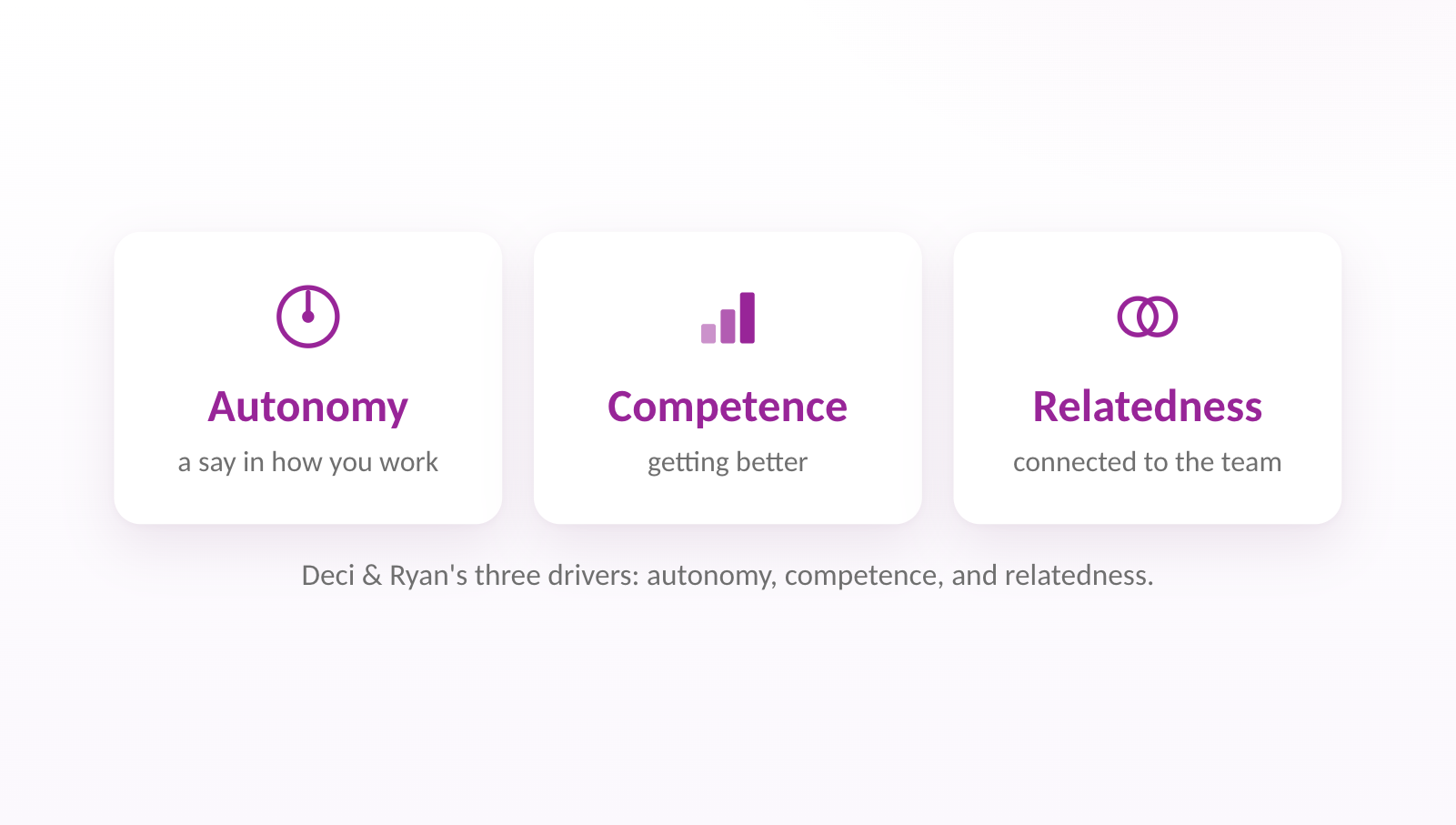
Self-determination theory, developed by psychologists Edward Deci and Richard Ryan, points to three needs:
- Autonomy: some control over how the work gets done
- Competence: a sense of getting better at something
- Relatedness: feeling connected to the people around you
Worked example
Two support teams get the same bonus. Team A follows a rigid script and is measured only on ticket volume. Team B can choose how to resolve issues and reviews tricky cases together each week. Team B builds autonomy, competence, and relatedness into the job, so it is the team most likely to stay motivated after the bonus is paid.
Frequently asked questions
- Can managers create intrinsic motivation?
- Not directly. They can create the conditions for it: clear purpose, room to decide, growth, and good relationships. They can also kill it with micromanagement.
- Is intrinsic motivation better than extrinsic?
- Neither replaces the other. Fair pay is a baseline. Intrinsic motivation is what goes beyond it.
- What are examples of intrinsic motivation at work?
- Taking on a hard problem because it is interesting, improving a process no one asked you to, or mentoring a colleague because it feels meaningful.
- What are the three drivers of intrinsic motivation?
- In Self-Determination Theory: autonomy (a say in how you work), competence (getting better at it), and relatedness (feeling connected to others).
- How do managers kill intrinsic motivation?
- Micromanagement, pointless rules, unfair treatment, and tying everything to small rewards, which can crowd out internal drive (the overjustification effect).
- What is Self-Determination Theory?
- A model by Deci and Ryan arguing that people thrive when autonomy, competence, and relatedness are met, which fuels intrinsic motivation and wellbeing.
Sources
- Deci & Ryan, Self-Determination Theory
- Daniel Pink, Drive (2009)
See it in practice
Compare employee engagement software
Related terms