Employee Recognition
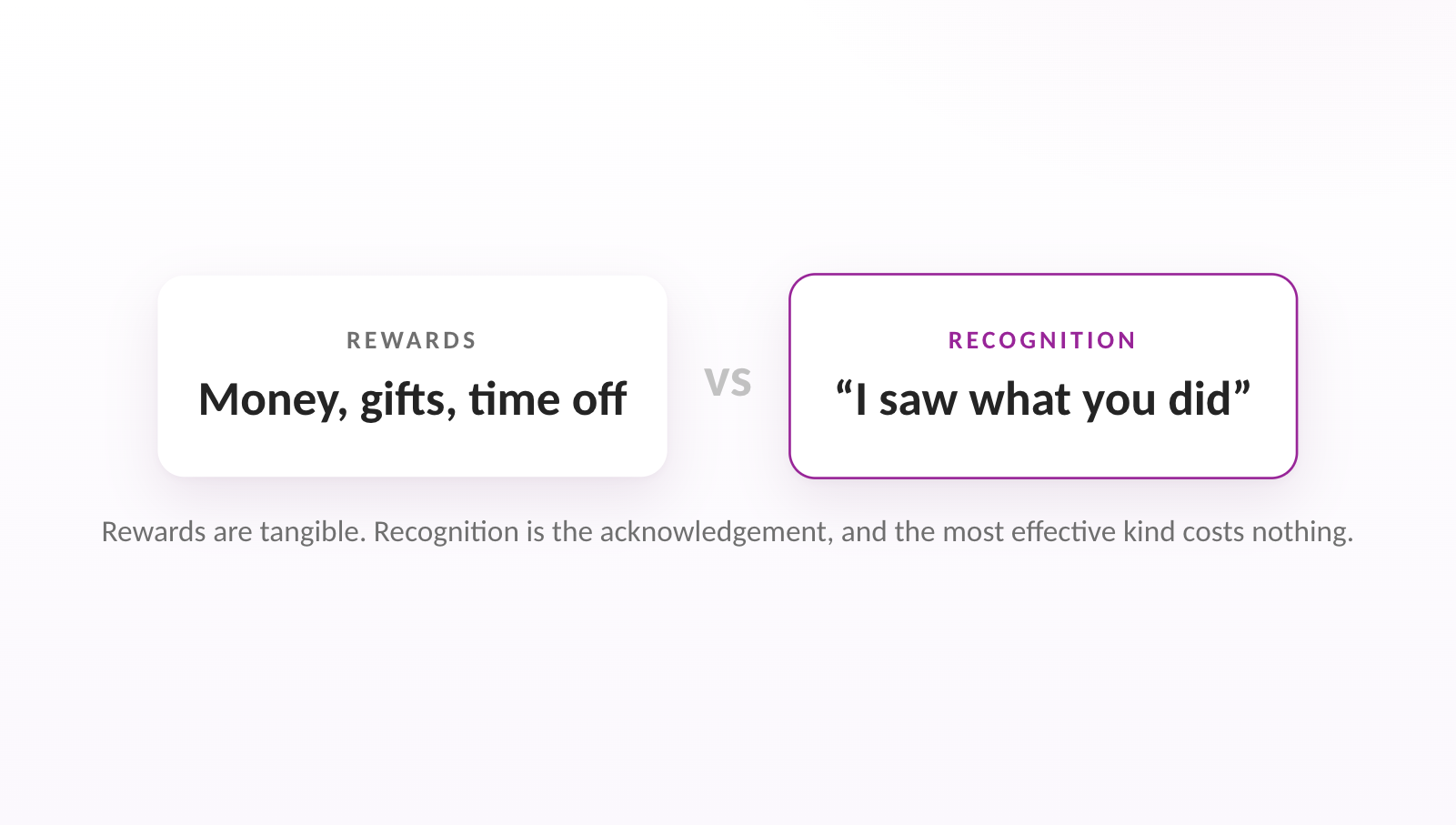
Employee recognition is the act of acknowledging an employee's contribution, effort, or behaviour, publicly or privately. It can come from managers, peers, or leadership, and it can be informal (a specific thank-you in Slack) or part of a formal programme (awards, peer-nominated shout-outs). Rewards are tangible, like bonuses or gifts. Recognition is the acknowledgement itself.
Also known as: rewards and recognition, recognition programs, employee appreciation
Reviewed
Key takeaways
- Recognition is acknowledging someone's work or behaviour; rewards are the tangible money and gifts.
- The most effective recognition is specific and costs nothing but attention.
- It can come from managers, peers, or leadership, publicly or privately.
- Feeling unrecognised is one of the most common reasons people disengage.
Why does employee recognition matter?
Feeling unrecognised is one of the most common reasons people disengage. Recognition is also the cheapest lever a manager has: most of the effective forms cost nothing except attention.
What are the types of employee recognition?
- Manager to employee: specific thanks in a 1:1 or team meeting
- Peer to peer: shout-out channels, peer nominations
- Top down: leadership calls out work at an all-hands
- Formal: awards, milestone recognition, spot bonuses
12 examples
- A specific thank-you in the team channel, naming the impact. 2. A handwritten note. 3. Credit by name in a leadership update. 4. Letting them present their own work to execs. 5. A peer shout-out round at the end of every retro. 6. First pick of the next interesting project. 7. Work anniversary messages that mention real contributions. 8. A spot bonus for going well beyond scope. 9. A LinkedIn recommendation. 10. A thank-you sent to their manager's manager. 11. An afternoon off after a big launch. 12. Asking them to mentor others on the thing they did well.
Frequently asked questions
- Recognition vs rewards?
- Rewards are tangible: money, gifts, time off. Recognition is acknowledgement. The best programmes use both, but recognition does more of the day-to-day work.
- Public or private recognition?
- Ask. Some people love a shout-out at all-hands. Others would prefer a private note.
- What are examples of employee recognition?
- A specific thank-you in the team channel, credit by name in a leadership update, a handwritten note, or letting someone present their own work to execs.
- Why is employee recognition important?
- It is one of the cheapest retention levers. People repeat recognised behaviour, and feeling unseen is a leading cause of disengagement.
- What is the difference between recognition and rewards?
- Rewards are tangible (bonuses, gifts, time off); recognition is the acknowledgement itself. The best programmes use both, but recognition does most of the day-to-day work.
- How do you recognise employees effectively?
- Be specific, name the work and its impact, do it close to the moment, and ask whether the person prefers public or private.
See it in practice
Compare performance review software
Related reading
Related terms