Personal Goals for Work
Personal goals for work are targets an employee sets for themselves to improve how they work, grow as a person, or keep a healthy balance. They overlap with professional goals but are more self-directed: habits, mindset, confidence, boundaries, and wellbeing at work. Some are shared with a manager. Others stay private.
Also known as: personal development goals, work habits, personal goals examples for work
Reviewed
Key takeaways
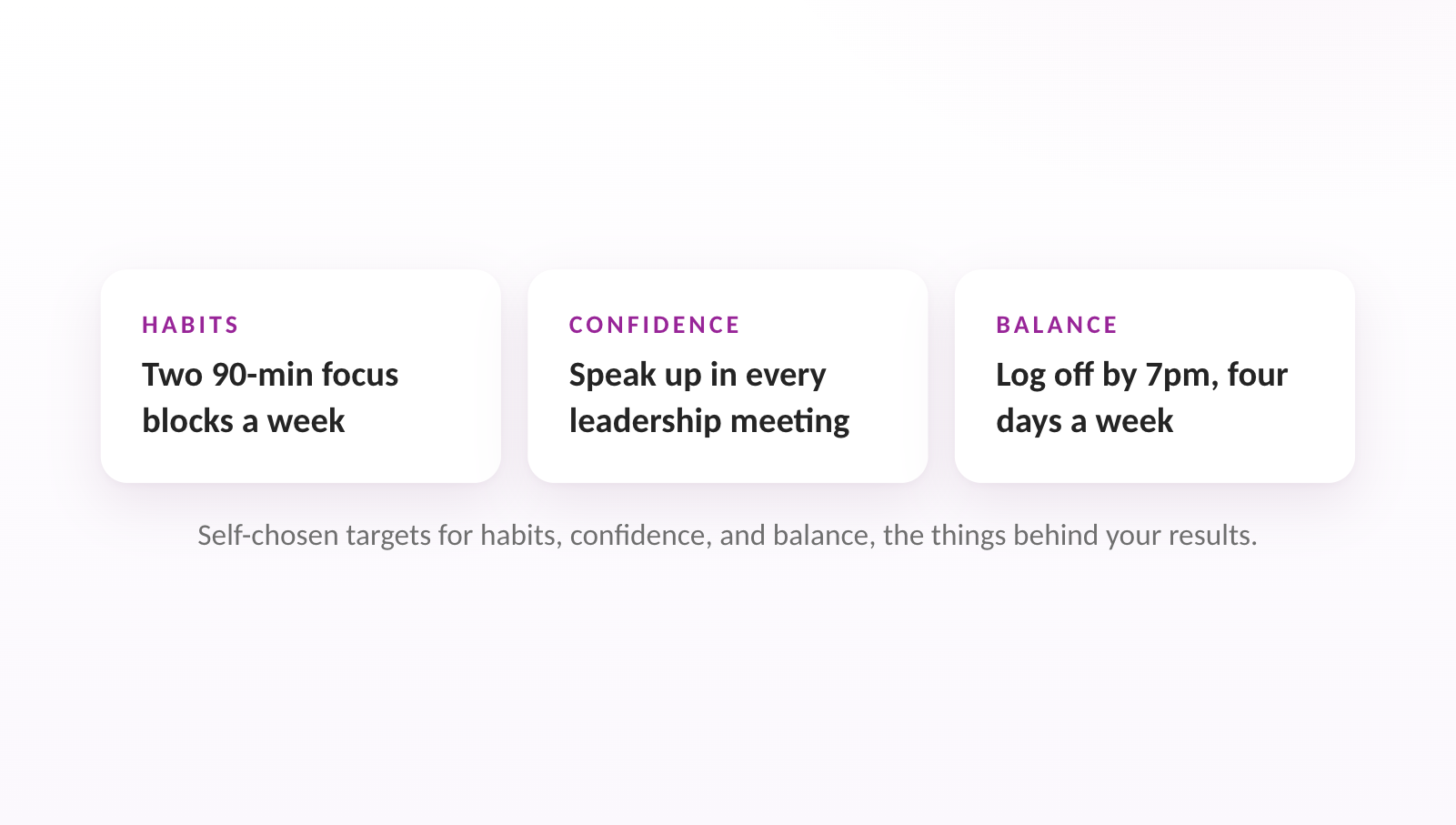
- Personal goals for work are self-chosen targets for your habits, confidence, and balance.
- They cover the things behind your results that never appear on a formal goal sheet.
- Share the ones where support would help; keep the rest for yourself.
- Small, concrete habits (deep-work blocks, logging off on time) compound.
Why do personal goals for work matter?
Many of the things that most affect performance, like focus, confidence, and energy, never appear on a formal goal sheet. Personal goals make them deliberate.
12 examples
Habits and focus
- Block two 90-minute focus sessions every week.
- Clear my inbox to zero every Friday.
- Plan tomorrow's top three tasks before logging off.
Confidence and communication
- Speak up at least once in every leadership meeting.
- Ask for feedback after every major presentation.
- Say no, with a reason, to one low-priority request a week.
Growth
- Read one book a month related to my field.
- Have one coffee chat a month with someone outside my team.
- Learn one new tool well enough to teach it.
Balance and wellbeing
- Log off by 7pm at least four days a week.
- Take all my annual leave this year.
- Take a real lunch break away from my desk three days a week.
Frequently asked questions
- Personal goals vs professional goals?
- Professional goals are about results and career progress. Personal goals for work are about habits, mindset, and balance that support those results.
- Should I share personal goals with my manager?
- Share the ones where support would help, like protected focus time. Keep the rest for yourself if you prefer.
- What are examples of personal goals for work?
- Block two 90-minute focus sessions a week, speak up once in every leadership meeting, or log off by 7pm four days a week.
- What is the difference between personal and professional goals?
- Professional goals target results and career progress; personal goals for work target the habits, mindset, and balance that support those results.
- Should you share personal goals with your manager?
- Share the ones where support would help, like protected focus time. Keep the rest private if you prefer.
- How do you set personal goals for work?
- Pick a few concrete habits across focus, confidence, and balance, make them specific, and review them in your own time or in 1:1s.
See it in practice
Compare OKR and goal-setting software
Related reading
Related terms