Interview Feedback
Interview feedback is the structured assessment an interviewer records after an interview, plus any feedback shared with the candidate. Internal feedback rates the candidate against the role's criteria, with evidence from the conversation, and a clear hire or no-hire recommendation. Candidate feedback explains the outcome and, ideally, one or two specific points they can use.
Also known as: interview scorecard, candidate feedback, interview evaluation
Reviewed
Key takeaways
- Interview feedback is the structured assessment an interviewer records after an interview.
- Rate against the role's criteria, with evidence, and a clear hire or no-hire call.
- Submit it before talking to other interviewers, or you anchor on whoever spoke first.
- “Good culture fit” without specifics lets bias drive the decision.
Free template
Interview scorecard template
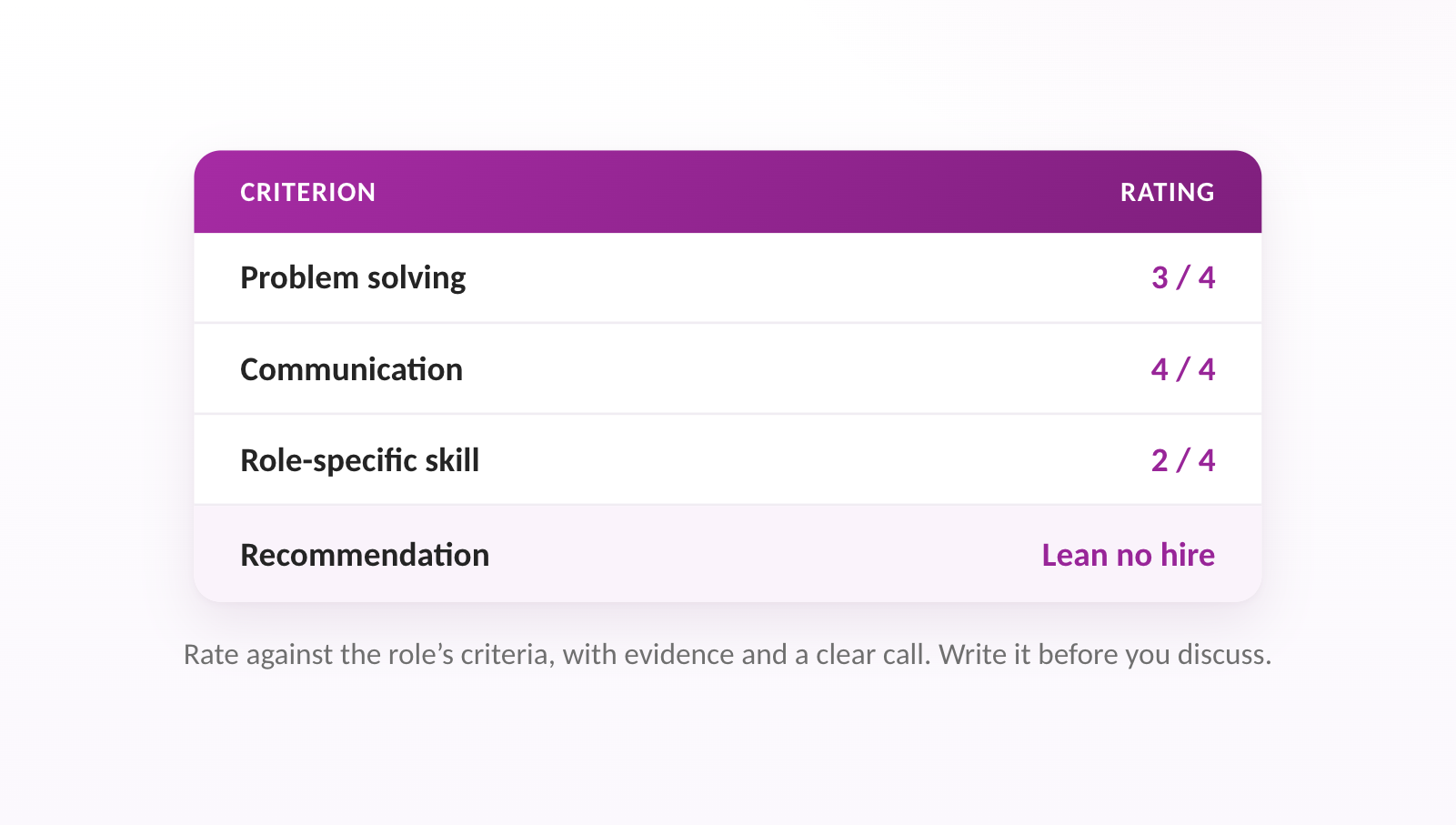
Rate against the role's criteria, with evidence, and a clear call. Fill it in before you talk to the other interviewers, so you are not anchored by whoever spoke first.
Why does interview feedback matter?
Vague feedback like "good culture fit" lets bias drive hiring decisions. Structured feedback tied to criteria makes decisions faster, fairer, and easier to defend. Candidate feedback, even brief, shapes your employer reputation.
Scorecard format (internal)
| Criterion | Rating (1–4) | Evidence |
|---|---|---|
| Problem solving | 3 | Broke the case into three drivers, missed pricing |
| Communication | 4 | Clear structure, checked assumptions aloud |
| Role-specific skill | 2 | Could not explain the data model behind her last dashboard |
| Recommendation | Lean no hire | Strong communicator, gap in core skill for this level |
What are the best practices for interview feedback?
Submit feedback before talking to other interviewers, so you are not anchored. Rate against criteria, not against other candidates. Quote what the candidate said. Avoid "fit" without explaining what you mean.
Candidate feedback example
"Thank you for your time. We have decided not to move forward. The panel was impressed by how you structured the case. The main gap for this level was depth in SQL and data modelling."
Frequently asked questions
- Should you give feedback to rejected candidates?
- Brief, specific feedback is good practice, especially after later-stage interviews. Check your company's legal guidance first.
- How soon should interviewers submit feedback?
- Same day, ideally within a few hours, while the detail is fresh.
- How do you write interview feedback?
- Rate each criterion on a scale, quote what the candidate actually said or did as evidence, and end with a clear recommendation. Avoid vague “fit” language.
- What is an interview scorecard?
- A structured form listing the role's criteria, a rating for each, the evidence, and an overall recommendation, so decisions are consistent and defensible.
- Why submit interview feedback before the debrief?
- To avoid anchoring. If you wait, you tend to agree with whoever spoke first instead of recording your own independent read.
- What is structured interview feedback?
- Feedback recorded against the same predefined criteria for every candidate, with ratings and evidence, rather than a free-form impression. It makes comparisons fair and reduces bias.
See it in practice
Compare performance review software
Related reading
Related terms