One-on-One Meeting (1:1)
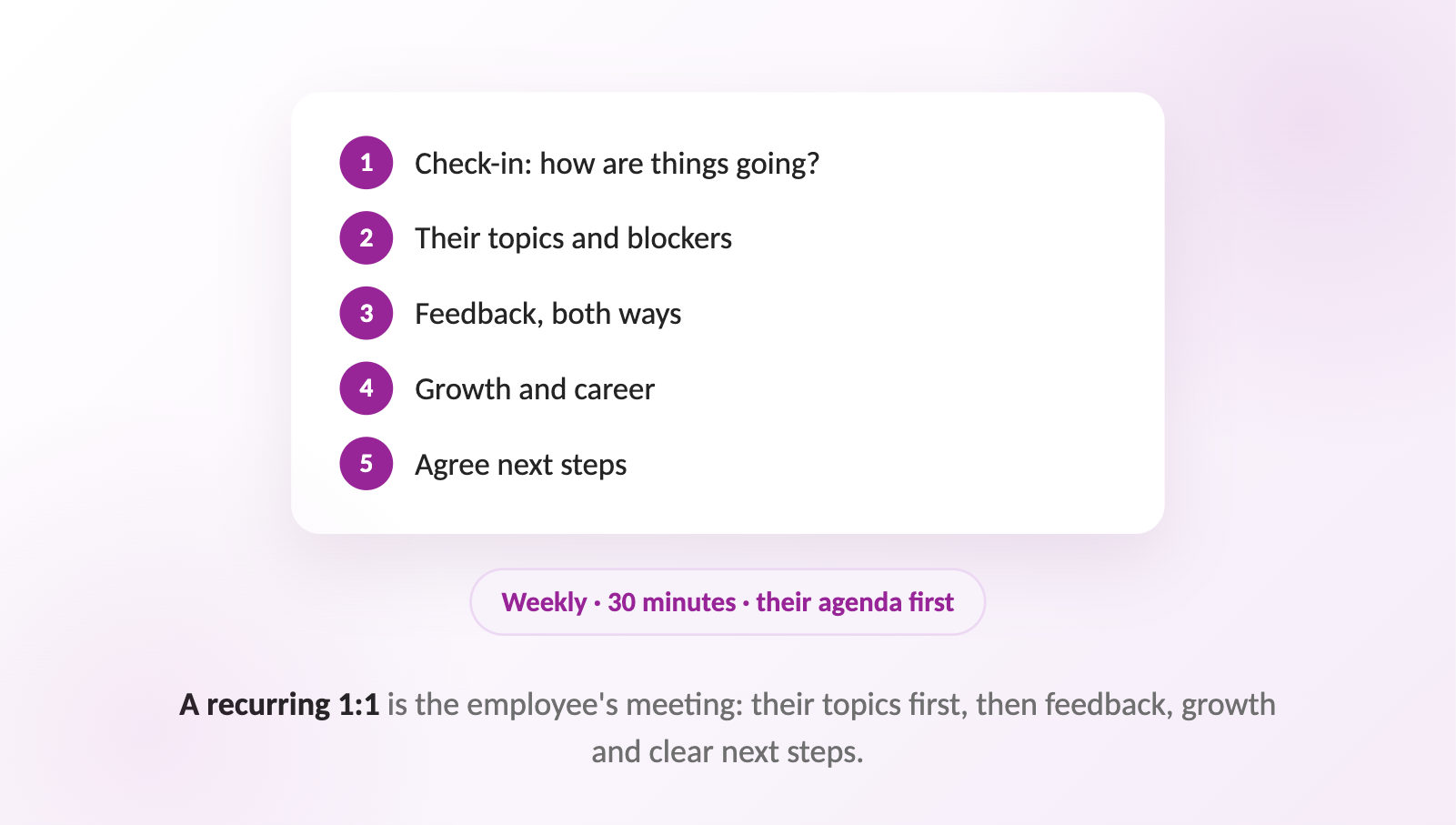
A one-on-one meeting (1:1) is a regular, private conversation between a manager and one direct report. It belongs to the employee: they bring the topics, and the manager listens, coaches and removes blockers. Most teams hold 1:1s weekly, fortnightly or monthly for 30 to 60 minutes. A good 1:1 is not a status update; it covers priorities, problems, feedback and growth.
Also known as: 1:1, 1-on-1, one on one, one-on-one meeting with manager, check-in
Reviewed
Key takeaways
- A 1:1 is the employee's meeting, not the manager's status update.
- Hold them on a steady rhythm; consistency matters more than length.
- Use a shared agenda so both people can add topics during the week.
- Write down actions and revisit them at the start of the next 1:1.
At a glance
- Who
- One manager and one direct report
- Cadence
- Weekly to monthly; 30 to 60 minutes
- Owner of the agenda
- The employee, with manager additions
- Related
- Skip-level meeting, employee feedback, performance review
Why do one-on-one meetings matter?
Most problems at work grow quietly. A regular 1:1 gives an employee a protected place to raise them early, before they turn into missed deadlines or a resignation. It is also where most real feedback happens, so by review time nothing should be a surprise. Andy Grove, who popularised the practice at Intel, described the 1:1 as a meeting held mainly for the benefit of the subordinate.
What should a 1:1 agenda include?
Keep a light, repeatable structure:
- Their topics first. What is on your mind? What is blocking you?
- Priorities. Are we aligned on what matters most in the next few weeks?
- Feedback, both ways. One thing that went well, one thing to change, and one thing the manager could do better.
- Growth. Once a month, step back to skills, goals and career.
- Actions. Who does what by when, written in the shared notes.
Good one-on-one meeting questions
- What is taking up most of your energy right now?
- Is anything slowing you down that I can help remove?
- What is one thing we should start, stop or keep doing as a team?
- How are you feeling about your workload, on a scale of 1 to 10?
- What skill would you like to build this quarter?
- What feedback do you have for me?
Worked example
Priya manages five people and holds 30-minute 1:1s every two weeks. Her report, Tom, adds two items to the shared agenda: a blocked vendor contract and interest in leading a project. Priya spends ten minutes unblocking the contract (she will email legal by Thursday), fifteen on what leading a project would involve, and five on feedback about his last client demo. Both actions go in the notes. At the next 1:1 they open by checking them off.
Frequently asked questions
- How often should you have one-on-one meetings?
- Weekly or fortnightly suits most teams; monthly can work for experienced, independent people. Pick a rhythm you can keep. A cancelled 1:1 signals the employee is not a priority.
- How long should a 1:1 meeting be?
- 30 minutes is a good default. Go to 45 or 60 minutes for monthly 1:1s or when a career conversation is planned.
- What is the difference between a 1:1 and a performance review?
- A 1:1 is a frequent, informal conversation about the present and near future. A performance review is a formal, documented assessment of a whole period, often linked to pay.
- What should you not discuss in a 1:1?
- Avoid turning it into a project status update that could be written down. Pay decisions and formal performance warnings usually belong in separate, documented meetings.
- Who should set the agenda for a 1:1?
- The employee should own most of it. The manager adds items too, ideally in a shared document both can edit before the meeting.
- Are 1:1 notes confidential?
- They should be private to the manager and employee by default. Agree up front what, if anything, is shared further.
- What is a skip-level 1:1?
- A 1:1 between an employee and their manager's manager. It complements, not replaces, the regular 1:1.
Sources
- Andy Grove, *High Output Management* (Random House, 1983)
See it in practice
Compare 1:1 meeting software
Related reading
Related terms