Managing Up
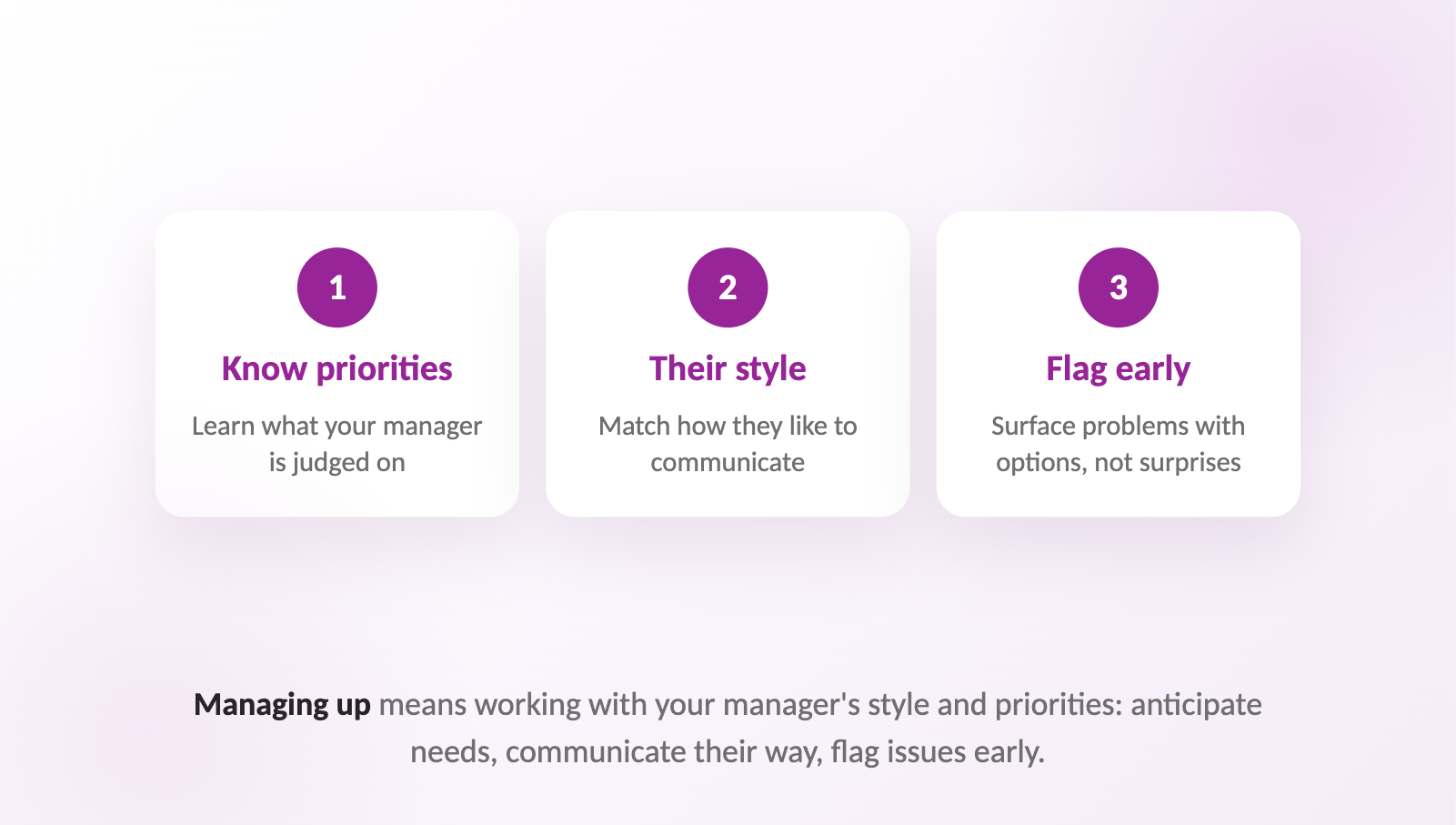
Managing up means deliberately building a good working relationship with your manager so that you both succeed. It involves understanding their goals, pressures and preferred way of working, keeping them informed, and asking for what you need. It is not flattery or office politics. Done well, it makes your manager's job easier, gets you the support and visibility you need, and leads to better results for the team.
Also known as: managing your boss, managing your manager, upward management
Reviewed
Key takeaways
- Managing up is working with your manager deliberately, not just waiting for direction.
- Start by understanding their goals, pressures and communication style.
- Share progress and problems early, with a proposed solution where you can.
- Use 1:1s to agree priorities and ask for the feedback and support you need.
At a glance
- What it is
- Proactively shaping a productive relationship with your manager
- Core habits
- Understand their goals, communicate early, ask for what you need
- Not
- Flattery, hiding bad news or going around them
- Related
- One-on-one meeting, upward feedback, skip-level meeting
Why does managing up matter?
Your manager affects your workload, priorities, development and pay. Yet they often manage several people, juggle their own targets and cannot see everything you do. John Gabarro and John Kotter argued in their classic 1980 Harvard Business Review article that the boss-employee relationship is one of mutual dependence, and that employees who actively manage it get better results. When you manage up well, you get clearer priorities, faster decisions and more support.
What does managing up look like?
- Learning how they like to work: detailed written updates or a quick verbal summary?
- Aligning on priorities: "Here are my top three this month. Is that right?"
- Flagging problems early: "The launch is at risk because of X. I suggest Y. Do you agree?"
- Making your work visible: sharing wins and progress, not just problems.
- Asking for feedback and support: "What would make the biggest difference to your view of my work?"
- Giving upward feedback: telling them, respectfully, what helps you and what doesn't.
How do you start managing up?
- Ask your manager what their goals and biggest pressures are this quarter.
- Agree how you will communicate: frequency, format and what they want to hear about.
- Bring an agenda to every 1:1 with updates, decisions needed and requests.
- Bring solutions, not just problems, when you raise an issue.
- Close loops: confirm decisions and follow through on what you said you would do.
- Review the relationship every few months: what is working, what isn't?
Worked example
A data analyst feels her manager micromanages her reports. Instead of complaining, she asks in a 1:1 what worries him. He explains that a previous report with an error reached the board. She proposes a short checklist she will complete for every board report and a weekly two-line status update. After a month, he stops reviewing drafts line by line, and she gets the room she wanted.
Frequently asked questions
- What does managing up mean?
- Working deliberately with your manager by understanding their goals and style, keeping them informed and asking for what you need, so you both succeed.
- Is managing up the same as sucking up?
- No. Flattery is about pleasing someone. Managing up is about working together effectively, including sharing bad news and giving honest feedback.
- How do you manage up with a difficult boss?
- Focus on what you can control: understand their pressures, adapt your communication, document agreements, and raise issues calmly in 1:1s. If problems continue, a skip-level meeting or HR may help.
- Why is managing up important for career growth?
- Your manager has a large influence on your development, visibility and promotion. A strong relationship means they know your work and goals and can advocate for you.
- What should I talk about in a 1:1 to manage up?
- Progress against priorities, risks with proposed solutions, decisions you need from them, feedback for each other, and your development goals.
- Can managers learn from employees who manage up?
- Yes. When employees share how they work best and give upward feedback, managers can adapt and lead the team more effectively.
Sources
- John J. Gabarro and John P. Kotter, "Managing Your Boss", *Harvard Business Review* (January 1980)
See it in practice
Compare 1:1 meeting software
Related reading
Related terms